

 Apple Podcasts
 Spotify
 Overcast
 PocketCasts
 Castbox
 Castro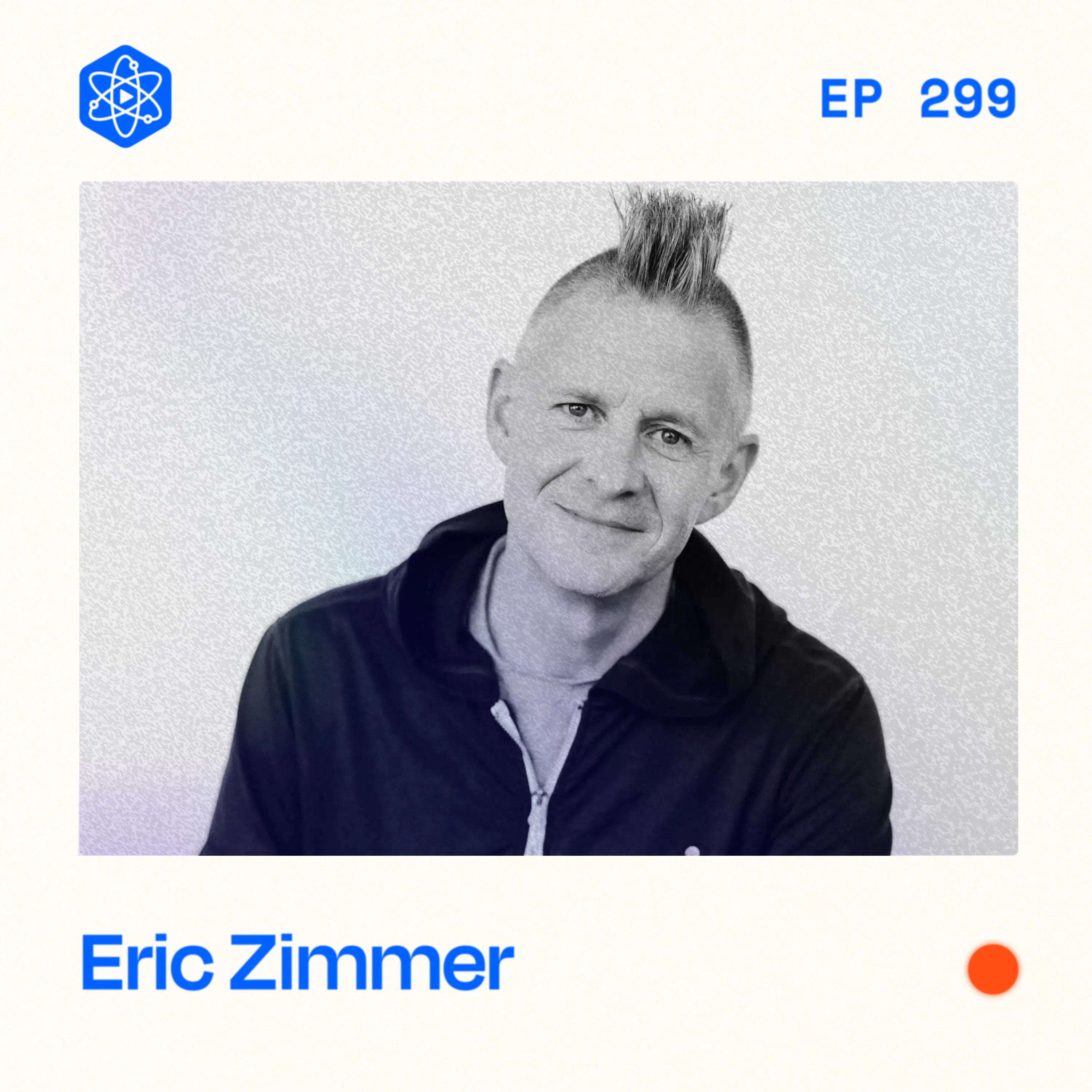
Eric is the host of The One You Feed, a podcast with over 500 million downloads.
Eric Zimmer launched The One You Feed podcast in 2014 with no audience, no name recognition, and a podcast name that took explaining. Twelve years, 850+ episodes, and 500 million downloads later, he released his first book — How a Little Becomes a Lot — a title that is, in every way, the story of his life. In this conversation, we talk about how incremental progress actually works, why you can't see it happening in real time, and why that's actually fine.
We also go deep on the business reality of podcasting in 2026 — the early mover advantage is gone, ad CPMs are harder to sustain, and Eric is actively pivoting from reaching many people loosely to serving fewer people more deeply. Then we spend a lot of time in the weeds of the book publishing process: the six-month proposal, the 18 months of writing in half-day increments, the uncomfortable dance between your vision and what an agent and publisher think will sell, and the emotional work of promotion — watching who shows up and who doesn't, and applying his own frameworks to keep from spiraling. This one got personal. I'm in month 11 of my own book proposal, and Eric helped me see the other side of a process that has genuinely been shaking my confidence.
Full transcript and show notes
***
TIMESTAMPS
(02:54) The One You Feed parable: two wolves, and which one wins
(05:18) How to remember to make the right choice daily (Still Point method)
(07:37) Building a podcast to 850 episodes: the only way is one at a time
(10:14) The hair growth metaphor for creator progress
(11:36) How Eric renews his commitment to the show after 12 years
(13:47) What it means to enter your "happy place" as a podcast host
(17:23) State of podcasting in 2026: early mover advantage is gone
(19:11) Pivoting from ad revenue to deeper relationships with fewer people
(22:38) Why Eric is (mostly) skipping video — and why that's okay
(24:58) The three-person team behind 500 million downloads
(27:45) How Eric knew it was finally time to write a book
(30:24) The writing process: three half-days a week across 18 months
(31:09) The proposal took six months — and ended up looking nothing like Eric's vision
(34:21) Jay opens up: 11 months into his own book proposal
(39:12) Non-negotiables: how to protect the heart of your book
(40:35) Expectations vs. reality of book launch week
(43:01) The emotional work of asking everyone you know for support
(44:47) Why the marketing marathon is harder than the writing
(50:55) How to ask for blurbs — and who says yes (Susan Cain, Charles Duhigg, Young Pueblo)
(55:51) What Eric would do differently for book two
***
RECOMMENDED NEXT EPISODE
→ #163: David Moldawer — Diving deep into book publishing with an industry insider
***
ASK CREATOR SCIENCE
***
WHEN YOU'RE READY
***
CONNECT
***
SPONSORS
Learn more about your ad choices. Visit megaphone.fm/adchoices
Eric Zimmer [00:00:00]:
The world does not need another book. It just doesn't. Right. But some people might need a particular book. And I felt like, okay, I have that.
Jay Clouse [00:00:24]:
Hello, my friend. Welcome back to another episode of Creator Science. Today I'm speaking with Eric Zimmer. More than 30 years ago, Eric faced a life altering battle with heroin addiction that left him homeless and facing prison. A turning point that sparked his search to understand how profound change happens and how we can chart sustainable paths forward while honoring both who we are and who we hope to become. In 2014, Eric launched a podcast with his best friend. No audience, and a name that took a little bit of explaining. And now, 12 years later, that podcast, the one you feed, has over 850 episodes and more than 500 million downloads.
Jay Clouse [00:01:05]:
The name comes from an old parable and we'll actually start the conversation with that story. So I'll let Eric tell you that story here in a moment. But Eric has a new book coming out today. It's called How a Little Becomes a Lot. And that title is really the story of his life. 30 years of recovery built one day at a time. 12 years of podcasting built one episode at a time. A book written in half day increments across 18 months.
Jay Clouse [00:01:31]:
In this conversation, Eric and I talk about how incremental progress actually works and why it's so hard to see it happening in real time. The business reality of podcasting in 2026, and how Eric is pivoting from an advertising model to a deeper relationship with a smaller audience. What the book publishing process is actually like, including the uncomfortable dance between your vision and what an agent and publisher think will sell. And the mental and emotional work of promoting a book, asking for favors, constantly watching who shows up and how Eric applies his own frameworks to keep from spiraling. This one got personal for me. I'm in month 11 of my own book proposal and Eric helped me to see the other side of a process that has genuinely been shaking my confidence a little bit. So I think you'll find it useful whether or not you're writing a book. If you do enjoy this episode, pick up your copy of How A Little Becomes a Lot.
Jay Clouse [00:02:19]:
There's a link in the show notes. Launch week is a big deal, so if you plan to order the book, this week would be a great time to do so. We'll get to that conversation with Eric right after this. I think a good starting point is I'd love to talk about the origin of your podcast. Name the one you feed because it's something that I had to look into when we first got introduced and we met at a coffee shop a long time ago. I think it's so prescient today and maybe new to a lot of listeners of the show. So can you talk about that?
Eric Zimmer [00:02:54]:
Sure. It's based on an old parable that goes something like this. There's a grandfather talking with her grandchild, and they say, in life, there's two wolves inside of us that are always at battle. One is a good wolf, which represents things like kindness and bravery and love, and the other is a bad wolf, which represents things like greed and hatred and fear and grandchild stops. Think about it for a second. They look up at their grandparent and they say, well, which one wins? And the grandparent says, the one you feed. So that's how I start every episode. The history of it for me is 30 years ago, I was a homeless heroin addict, but I had pretty much burned my life to the ground.
Eric Zimmer [00:03:35]:
And in some church basement somewhere in Columbus, Ohio. Back then, somebody read that parable or said it, and I just immediately got it, and it hit really hard. And it was clear to me that there are things they are saying that I can do that will lead me towards recovery, and then there's the things I know and can think and feel and do that will lead me back towards addiction and jail and. And death and all of that. And so it was just a very stark choice. And so years later, when I got the idea to do the podcast, which kind of came out of nowhere, that was what just showed up. It was like, oh, you could do a podcast and you could read that thing to people and get people's take. And on one hand, like, there's not a whole lot to say about it.
Eric Zimmer [00:04:19]:
The good thing about a parable is you hear it and you're like, oh, I get it immediately. And I think there's a lot of nuance and depth in there. As far as podcast names, I don't think it's a good podcast name because nobody knows what the heck it is. Like, is it a cooking show? I mean, what is it? But as a premise to build something interesting off of, it's worked pretty well.
Jay Clouse [00:04:40]:
Yeah. Yeah. I love it. And I feel like, again, I think it's prescient today, whether it is like, light versus dark or whatever binary you have in your life and you feel internally. I think it's a good daily reminder to know that it's a choice, you know, and it's not a choice that is always easy to make. It's probably the hardest part is just remembering that it is a choice and to make a choice. Is there anything that you've learned over the past, I guess, 12 years since you started the podcast, or the past 30 since you've heard this parable that helps remind you to make that choice every day?
Eric Zimmer [00:05:18]:
That's something I think a lot about is how do we remember these things? Because we know that awareness is kind of fundamental. To make any sort of change, you have to be aware of what's happening in order to change it. And yet it's very difficult to be aware. I have some methods in the book for doing that. I've kind of developed a method I call the still Point method, which is a way of doing that, because, yeah, remembering is hard. It's really a challenge.
Jay Clouse [00:05:48]:
Thank you for being vulnerable and sharing where this all started for you in your 20s. And it strikes me now that you've now spent more time after that point in your life than you did before it. So I'm curious how that fact impacts you, because I'm sure in some ways it's still, like, very visceral. And in other ways, maybe you feel like a lot of time has passed since that time.
Eric Zimmer [00:06:16]:
Yeah, I've spent way more time in recovery in my adult life than I did in addiction. I don't know how much more, but it's a lot. And in some ways it is visceral, but it's a long time ago and I am a very, very, very different person in so many ways. I mean, I think we all have some kernel of ourselves that we carry around no matter what. But the mindset. I tell a story in the book about how I was able to, for like a month, pick up opiates at the drugstore and take them to my mom after she had a fall. And it wasn't until a month had gone by that I even recognized it. I mean, I would have potentially robbed you at gunpoint at one point for those.
Eric Zimmer [00:07:06]:
I tore my life to the ground for those. And now they're riding next to me in the passenger seat with no more significance than like a loaf of bread. So in that way, yeah, I have changed tremendously. And I think it speaks to the nature of change that that didn't happen the day I walked into a treatment center. It didn't happen on my one year anniversary of being clean.
Jay Clouse [00:07:33]:
Right.
Eric Zimmer [00:07:33]:
That is. It's something that has transpired and changed over time.
Jay Clouse [00:07:37]:
This may be forcing a comparison that isn't actually there, but I'm curious to get your take on it you've been in the content game now for a long time. The podcast, I think, started in 2012 or 2014.
Eric Zimmer [00:07:51]:
14.
Jay Clouse [00:07:51]:
2014. Which in podcast years is a long time.
Eric Zimmer [00:07:55]:
Yes.
Jay Clouse [00:07:56]:
And podcasts are built week by week, episode by episode. Your book is called How a Little Becomes A Lot. It just strikes me that a lot of your story has been little incremental steps. And I'm curious if that practice has been a core part of how you think about content.
Eric Zimmer [00:08:15]:
100%. You don't get to 12 years and 850 plus episodes quickly. You get to it episode by episode. I mean, it's obvious on one hand, and yet it's also true that we just made a commitment. In the beginning, we released once a week. We do twice a week now. In the beginning, I just made a commitment, commitment six months. Every Tuesday, at the end of that time, we'll assess, do we even want to continue to do this thing? Do we even like it? And every Tuesday and now every Friday for 12 years, there has been an episode released.
Eric Zimmer [00:08:50]:
Sometimes it's a re release. You know, we go back and we add a new intro or whatever. But if you were following us, you would find in your feed, for 12 years, an episode show up when they're supposed to show up, which is a remarkable degree of consistency. But we just took that piece of it serious. And I think our growth as a podcast happened exactly the same way. It was just incremental. There was no big, like, break. You know, we would get featured by Apple and that I'd be like, oh, my God, this is incredible.
Eric Zimmer [00:09:24]:
Right? And it would go up. And then if you had that happen to you, or you've gotten hit on a social media algorithm that worked, or whatever, you see your listeners, viewers, whatever, go up and then you see it gradually come back down, and ideally you're a little bit higher than you were before. And that's been us just year after year after year. We get featured here, we get featured there. I go on someone else's podcast, we add a few listeners, we just keep accumulating. And that's really how it has happened, is little bit by little bit. And sometimes that's challenging. Cause it seems like you're on a plateau, right?
Jay Clouse [00:09:59]:
Yeah, yeah.
Eric Zimmer [00:10:00]:
It seems like episode to episode, week to week, month to month. It's like I don't see anything happening, but measured over a longer time period, I just see a steady up and to the right arrow.
Jay Clouse [00:10:14]:
Yeah, it's kind of like hair growth. I mean, I shaved my head now, but you Get a haircut every month or two and day by day, you don't really notice that your hair has grown at all. But then suddenly it's time for a haircut. And I feel like so much of creator growth is like that where like in the moment you don't really appreciate it. And we're very rarely doing anything to cut back. So it's even harder to the progress that you're making. I was thinking the numbers that your show have done is just huge. 500 million downloads.
Jay Clouse [00:10:45]:
I can't really fathom that number. But really, to me, the more unfathomable number is 850 plus episodes. We've done almost 300 episodes of this show now. So you've put out three times as many episodes as I have. And sometimes to me, the show feels a little bit like a slog. At the end of last year, I had lost a little bit of a flame for it and that showed in listenership and I'm just so inspired by that progress. How do you renew your vows to the show or maintain your curiosity to do the work, knowing that inevitably, as many conversations as you've had, you've probably started to see some patterns. And sometimes I would bet you can guess what the guest might say on a question that you're asking.
Eric Zimmer [00:11:36]:
Yeah, it's interesting because I've never done anything this long in my life. I mean, it is an outlier for me to have done anything the same thing this long, particularly career wise. And yes, the material is remarkably similar. I've read so many books in this space and it's very rare that I don't see the same stories recycled. I don't hear this. I almost never come across anything new. Now, that has made the prep process for me less enjoyable because I love to learn and I'm not really learning during the prep very much. What I've been lucky in is that for some reason, when I hit record and I start Talking to somebody, 95% of the time, I just enter into my happy place.
Jay Clouse [00:12:33]:
What does that mean?
Eric Zimmer [00:12:34]:
I just, I like doing it and I kind of disappear into it. The conversation is all there is to me, that sort of effortless effort kind of thing. I'm right in it. And I don't know why that is. I don't know why that magic has continued. But that's what keeps me going, is the fact that when I'm in it, I love it. And then, you know, I help a lot of people who are really, really struggling. And so the kind of emails I get around that are also very, very valuable.
Eric Zimmer [00:13:06]:
I mean, my. I have a. I have a part of my community. We all sort of segment our audiences and think about who they are. And part of my community, I just call them the super strugglers. Like, I just attract them like moths to a flame. I think just given my history with addiction, given my history of depression, given my openness about all that, I att kind of people. And so what I get are really dramatic emails from people.
Eric Zimmer [00:13:33]:
You know, your podcast saved my life, you know, that sort of thing. So I think it's the combination of loving the actual activity and then what I know it's doing for other people that allows me to keep doing it.
Jay Clouse [00:13:47]:
When you say that you hit record and you're in your happy place because you're really enjoying that activity, does that translate just to any conversation that you have with anyone throughout your life? Is it the same experience to you?
Eric Zimmer [00:13:59]:
No, not necessarily. Although it has become more that way over time. So it doesn't have to be my podcast. Like, I'm there right now. I'm in my happy place right now with you. Right. I just, I like it. And I have found that I've gotten better at somehow bringing that to conversation.
Eric Zimmer [00:14:16]:
But I'm naturally a very sort of shy person. I'm an introvert. I don't do well with people that I don't know necessarily. But that has changed a lot. And the focus that I can bring to a conversation now and the way that I can sort of ask questions has made me much better at doing it in my day to day life.
Jay Clouse [00:14:38]:
Well, there's something about. I find myself noticing when somebody's energy and presence puts me at ease, like physically. And I feel like you have that. Do you think that is innate or has that been developed?
Eric Zimmer [00:14:55]:
A little of both.
Jay Clouse [00:14:56]:
I would love to develop it. How can I develop that?
Eric Zimmer [00:14:59]:
Well, I think you're pretty calming.
Jay Clouse [00:15:01]:
I mean, I. I think I'm mirroring you right now.
Eric Zimmer [00:15:04]:
Oh, I see, I see. I think the only way to really develop that is you develop those internal traits to a certain degree. As you become calmer, as you become somebody who's better able to ride the waves of life, then I think that starts to translate. But I think it also develops in an ability to learn to settle into a conversation and relax into it a little bit. Genuine interest in other people puts them at ease. And I generally have that. So again, I think it's a little of both. That's not a very satisfactory answer.
Eric Zimmer [00:15:48]:
I wish I could give you, like, go do this and it'll just. It'll make it happen.
Jay Clouse [00:15:52]:
Oh, it's all good. I think when it's something that's innate to you, it can be hard to explain or pass along if you haven't spent time thinking about it. It's just something that I'm noticing lately. My wife and I watch a lot of trashy reality tv. It's just one of our guilty pleasures. And on the new season of Love is Blind, which was filmed at least partially in Columbus.
Eric Zimmer [00:16:11]:
Oh, really?
Jay Clouse [00:16:11]:
There's a gentleman on this season, I forget his name. He has dreads. He works at Ohio State as a professor. But he has this calming presence. It's just. To me, it's such a magnetic trait. I don't know if it's a season of life that I'm in, but I just notice when people have a calming presence and it's something that I've flagged as. I want to work on that.
Jay Clouse [00:16:30]:
I think it's a good thing to have as a podcast host because we don't get a lot of time with our guests. A lot of. I mean, most of the time when I talk to someone on the show, it's the first time I've ever talked to them. And so it can be so useful to have calmness, presence, assumed rapport. So I have to think that 850 reps has served you well in this regard as well.
Eric Zimmer [00:16:52]:
For sure. I mean, doing that many reps, I should be really good at it. If I wasn't, you might conclude there was something wrong with me, although I took to it fairly naturally. I think.
Jay Clouse [00:17:04]:
Well, before we get into the book, which I want to talk about a lot, I feel like I would be remiss not to get your perspective on the state of podcasting, how it's evolved, how you're thinking about it today, because it's changed a lot. I think when you started uploading, it might not have even. It might have been on ipods at the time. So not quite that far back, but
Eric Zimmer [00:17:23]:
not quite that far back. But close. But close. Yeah. I have seen a lot and it has changed a lot. I think it would be very difficult to do what we did back then today.
Jay Clouse [00:17:36]:
In what way?
Eric Zimmer [00:17:37]:
Well, we were complete unknowns from Columbus, Ohio. We had no audience, we had nothing. I'd done nothing in my life like that. And we have a good show and I think it's a really good interview style show, but it's also not that inventive. Right. I mean, so back then there was an early mover advantage, I think, to a certain degree. And I don't think that that exists anymore. So I think today to get to the size that we were able to get to, you've either got to have a really big name or you've got to be doing something really distinct, really
Jay Clouse [00:18:14]:
big name as a host.
Eric Zimmer [00:18:16]:
As a host or a show concept, even more.
Jay Clouse [00:18:19]:
I see.
Eric Zimmer [00:18:19]:
I'm not saying that you can't succeed at podcasting, but it's harder to be an interview style show and break through to the level that we were able to break through, where a million downloads a year kind of, kind of thing would be very difficult to replicate today. And even for us, it's difficult to maintain today because there are so many more podcasts. There are so many podcasts that have big names. You know, when all of a sudden Michelle Obama drops a podcast or Amy Poehler drops an interview style podcast, you're competing. And those are huge names. Right. There's a lot more money behind it than there ever was. So I found it harder to compete at the big podcast game.
Eric Zimmer [00:19:11]:
And so our game is changing a little bit, right? Our game is changing a little bit to we were once able to be in a place where we get a few pennies from a whole lot of people advertising, right? You listen to my show, I get a cent. I don't know what it is, probably a fraction of a cent. I've done the numbers in the past, but whatever that I don't think for us is a sustainable long term model.
Jay Clouse [00:19:37]:
Is the model changing or is reach more challenging?
Eric Zimmer [00:19:41]:
Reach is more challenging. Reach is more challenging. And I do think there's been a little depression in CPMs over time, but it's mainly a reach thing. Right. I just don't think that we will sustain the numbers that we've had. We have seen and we will see some contraction in our overall audience size. So then it becomes for us, and this is the pivot the business is in the middle of, and you and I have talked about it, is instead of getting a couple cents from a whole lot of people, I need to get more money from less people, which actually fits me well in a way. I think it fits my personality.
Eric Zimmer [00:20:24]:
I think it fits what I like to do. I'm not very good at chasing the algorithm and I don't really want to. It's just not who I am. And I think that's more and more the game today. I think there's more and more clickbaity headlines. You know, you look at like diaries of a CEO and I feel like it just. It was a great show, and then I feel like it has polluted the podcast industry. Yeah, man.
Jay Clouse [00:20:50]:
I see any, any title and or thumbnail from that show today, and it does the exact opposite of what I was saying to you that your presence does to me. Just the packag of one of those episodes is, like, physiologically stressful 100%.
Eric Zimmer [00:21:04]:
And the fact that it's working means a lot of other people are doing it.
Jay Clouse [00:21:09]:
Yes.
Eric Zimmer [00:21:09]:
And so I'm not the kind of person that's ever gonna have a YouTube thumbnail of me looking completely shocked by one tip that I learned. If I have any message about change, it's that it is not simple. There's not one tip to it. So I just think, given the overall environment that's out there and what my skills are, I think my skills worked from 2014 to 2021 pretty well. 22, maybe. But I just don't think they're the same match today. Again, I'm not saying that I don't think we can be successful. That's not any of what I'm saying.
Eric Zimmer [00:21:46]:
I'm just saying that the strategy, as any strategy in a business, is shifting.
Jay Clouse [00:21:51]:
And to put a fine point on that, you're saying that instead of being fully devoted to advertising revenue, you are looking for ways to monetize and have a direct relationship with your audience without or outside of the advertiser. I should say.
Eric Zimmer [00:22:08]:
Yes. And, you know, I'm starting to look a little bit towards, you know, with a book coming out, I'm starting to look a little bit towards more speaking opportunities, perhaps ways that I could take this message into corporations. I mean, I spent 25 years in the software world, software startups, all the way up to, like $200 million projects for Fortune 50 companies. So I have a background there. And so I'm also exploring that being the direction that we take certain things.
Jay Clouse [00:22:38]:
Also, what about the push to video? What's your relationship to video?
Eric Zimmer [00:22:46]:
It's not a good one. I mean, for a whole bunch of reasons. It has been one of those things that we talked about doing then iHeart, we were with iHeartMedia for a few years. They took on producing our episodes for us. So we got a bunch of them out there, but we never did anything to promote it. And then that relationship ended. So then it was a matter of retraining my audio editor, who's been with me from the very beginning. He's my best friend to do video, and we just don't do it much.
Eric Zimmer [00:23:15]:
And I feel the pressure to do it and I feel negligent not doing it and it is not my favorite place. So I would say 97, 98% of our audience is still all audio.
Jay Clouse [00:23:29]:
I feel like that emotional signal is important to listen to. You know, I know to feel this. Like I have pressure to do it. I feel like I should do it. To me, that is not the clean burning energy one, that you advocate for on the show and two, that leads to great content. Today I feel like more than ever people can tell when something was created and published out of joy and excitement and enthusiasm versus when it's not.
Eric Zimmer [00:23:57]:
Yep. It's why, like we've never been good on social media. We just have never been good at it. We're doing a little bit of it again because we've got, I've got a book coming out and I feel like there's some stuff to do there. But I'm not a social media user. It's not something I do. So there's no way for me to be good at it. So yeah, we have very much just kept the main thing.
Eric Zimmer [00:24:21]:
The main thing which is I'm happiest with a microphone and talking to another person. I don't mind video being on. It doesn't bother me in this context. I actually like to be able to see the person and have them see me. But there's a reason that like my book launch is not a social media campaign driven thing. It's not a YouTube short or YouTube video driven thing because I'm just not, that's not what I like doing. So I do try and respect that to a large degree, which is like focus on the things that you enjoy and that's where you almost always will be more successful.
Jay Clouse [00:24:58]:
You're using the word we a lot. Can you talk about your team?
Eric Zimmer [00:25:01]:
Sure. So I started the show all these years ago with my best friend Chris. And I started the show for a variety of reasons, but one of them was I wanted to spend more time with him and he was an audio engineer. So when I got the idea for it I was like, oh, he could edit, do all the audio stuff. And that has, that has worked all these years. That's, he's, that's still what he does. It's pretty much all he does. He's, he doesn't get too involved in any of the rest of it, but he's there and his spirit is in the show even though he's not on it.
Eric Zimmer [00:25:29]:
Right. I reference him, I talk about him. He's done ad reads with Me and him being there was really important to me, always has been. About seven years ago, I added a five hour a week virtual assistant. I sourced it from my audience. Sourced her, I should say. I went to my audience, asked, like, took this interview, people. And over the years she has grown into a full time employee and I would say she is operations.
Eric Zimmer [00:25:59]:
She handles everything about getting a podcast out into the world. She handles all the scheduling, she handles getting the files to Chris, she handles posting them, she schedules what we're doing. She's very involved in guest booking. I mean, ultimately I have the final say in that, but I listen to her and we go back and forth on it and then she helps with everything else. Email, newsletters. And so that's my team, me, Nicole and Chris. And it's a fun little, very close knit team.
Jay Clouse [00:26:29]:
That's so cool though. That team has done 500 million podcast downloads and produced a book. That's awesome. That's like why I love content. I love when people have very elegant business models. And if you were to take on video as a team, you're gonna double your team overnight.
Eric Zimmer [00:26:45]:
Yeah, I've been trying to get Chris to take it on and it's been mixed results. And so we haven't been doing it. And I'm not real stressed about it. I'm like, let's try and figure this out, you know, because it does seem to me on one hand like we have long form conversations on video. We might as well put them out where video is. But I just don't see YouTube being a big part of our, our overall strategy.
Jay Clouse [00:27:13]:
After a quick break, Eric and I dig into his book publishing. What drove him to write it, his process and everything leading up to the release. I love this part of our conversation and I think you will too. So don't go anywhere. We'll be right back. And now back to my conversation with Eric Zimmer. How did you know that it was time to write a book? I imagine you probably had opportunity even earlier than you did and you chose not to. So how did you know when the right time was?
Eric Zimmer [00:27:45]:
So I was approached a number of years ago, I'm going to say seven, eight years ago, something like that, by Harper Wan, who is one of the biggest publishers of books in my space. And the acquiring editor there loved the podcast and she came to me and she said, I'd love to do a book about the podcast. And I was like, I don't know, but God, it's Harper one, for crying out loud. Like they're coming to Me. So I did the work to try and put together what she wanted, and they ultimately said, we don't think so. I don't know whether the writing was bad. What I do know is I didn't know what it was. I was, like, taking the podcast, and I was trying to synthesize it, and I didn't know what it was.
Eric Zimmer [00:28:30]:
Turns out that work was actually incredibly valuable to me down the road, but I didn't have it then. So at that point, I kind of put it to bed for a number of years. And, yes, I would occasionally get approached by smaller publishers. I would occasionally get the. We ought to just, you know, bundle all the episodes together into, like, a companion book that goes out. But. But there was no real thing behind it. But a few years ago, I got a podcast agent, and the podcast agent happened to be out of a literary agency, and the literary agent approached me about the book, and she wanted to do a book called the one you feed about the podcast.
Eric Zimmer [00:29:10]:
And I didn't end up working with her. But what I realized was I have the book because I've been teaching this spiritual habits, which turned into wise habits course. I have my thing. I have a view on how we change. I have a view on how we become more content and satisfied. Like, I felt like I have it, and I was able to free up enough time in my schedule. We were successful enough that I could free up enough time that I felt like I could do it. Well, because I'm a book lover.
Eric Zimmer [00:29:44]:
They've been my best friend since I was, like, 4 years old. So having a book feels really important to me. And I didn't just want to have a book. I was like, if I can't do it, well, I don't want to do it. The world does not need another book. It just doesn't. Right. But some people might need a particular book.
Eric Zimmer [00:30:04]:
And I felt like, okay, I have that. So I had the space and I had the idea. And so then I sort of embarked on the whole process of finding an agent and going down that whole road.
Jay Clouse [00:30:14]:
Tell me about the space. Tell me about how much space you tried to clear, what your contribution on a daily or weekly basis looked like as you're writing this.
Eric Zimmer [00:30:24]:
It varied a little bit, right? The writing process was a year, although the proposal was, I mean, six months, kind of on its own almost. But once I got into the writing, it varied a little bit. But in general, I tried to have at least three half days. So that could be one whole day and a half a day, three half Days scattered throughout the week. But that was what I aimed for. And then I subdivided those in my own mind because a half a day is a long time. Sitting down and being like, I'm going to write for half a day feels very daunting to me. So I broke that into really small segments.
Eric Zimmer [00:31:00]:
But that was the overall goal. And I would say I got close to that. Not perfectly, but I would say that was the commitment I made.
Jay Clouse [00:31:09]:
When you say the proposal was six months, what was the most time consuming part or parts of the proposal for you?
Eric Zimmer [00:31:17]:
So I'm fortunate. I know a lot of authors, so I was able to ask for some introductions. And I got an introduction to a really great top tier New York agent who was my agent. And he said, all right, here's what I want you to go do. Go do this, go do that, go do that. And I labored away at that for, I don't know, a month maybe. And I gave it to him. And he very politely said, well, I don't quite think we've got it.
Eric Zimmer [00:31:44]:
It's like my. I've been with Zen teachers before where you're working on, like, a koan. And they'll say, I think you need to sit with that a little bit more. Which is just a polite way of saying, like, no. The answer is no, you do not understand it. I felt like that was kind of what it was with him. And so he was like, I think it needs to do this and you needed to do that. And I.
Eric Zimmer [00:32:03]:
And I said, richard, if I knew how to do that, I would have done it. Like, I don't know how. And I was really, really fortunate because I don't think this is common. But Richard said, okay, I've got an editor here. I'm gonna let him work with you. So this editor and I started working together and we would have a conversation and then he would come back and he'd say, all right, go write this or take this thing you already wrote and reshape it like this. And I'd give it back. And what made it take long was that there were big gaps in there where I would give him something and he would be off working on it.
Eric Zimmer [00:32:37]:
But, I mean, I was not his only thing, right? So it's not like he was turning things around super quickly again. I'm incredibly grateful that my agent did it at all. It was an interesting process because what they came back with, a proposal was very different than what I had envisioned.
Jay Clouse [00:32:53]:
In what ways different how?
Eric Zimmer [00:32:55]:
They really wanted to focus the book, at least initially. On the idea of how a little becomes a lot. That was their framing. Mine was a broader framing. It was around how we take behavioral science and we can apply it to our thoughts, emotions, and spiritual practice. And so as they were shaping it, I definitely had hesitations. I was like, well, I'm not sure. Like, I'm not going to write a whole book on that.
Eric Zimmer [00:33:21]:
How much can you say about little by little, right? This is not a whole book. And they said, look, trust me, under this, you'll be able to write the book you want to write. Trust me. And so I let him shape it. And I was like, I hired this guy for a reason. His job is to go sell this book and get me a good advance. They insist that I'll be able to write the book that I want under this, even though it's a little narrower than I would have put it. And I'm glad I did, because we got five offers on the book, and I got a good advance and it all went well.
Eric Zimmer [00:33:53]:
And the truth is, yeah, as soon as I got to my publisher, I was like, well, that's not quite what I see. And she's like, oh, I don't see that either. And we collaborated, and I indeed wrote the book that I wanted. And their framing was useful because it caused me to think throughout the book, even with everything that I would talk about, is there a little by little way of this? And so that became an idea and a framework that did thread itself really nicely through the book.
Jay Clouse [00:34:21]:
You have no idea how much I needed to hear this. Right now. I'm going on month 11 of my proposal. We've done two passes. I actually have had an editor with me the whole time, and she's been great. But proposal number one, we turned in, and the feedback was like, there's something here, but you don't have the right title and subtitle. And went back and forth, back and forth. Eventually, my agent, who's also like, a brilliant developmental editor in her own right, she's like, I really like this title and subtitle.
Jay Clouse [00:34:53]:
Does this fit what you're thinking? And I was kind of like, kind of. I was resistant at first, wasn't super into. Grew on me. And we wrote proposal version number two. And she says, this is better, but you haven't leaned into the title and subtitle enough yet. And right now, the resistance, I feel, is like, I'm worried that I'm being put into a narrow container that starts to threaten what I want to do with the project. But also, I've Been told this is the selling title, this is the selling package. This all can change.
Jay Clouse [00:35:28]:
But it feels scary to accept that and work within it. But that's exactly where I'm at right now. And I don't know if I'm breaking through and finding my way through or if I'm justifying to myself what needs to happen to move forward. It seems like I haven't had this much creative collaboration in a project for a very long time, and it's hard for me to give some level of direction and control to somebody else, but that's what I have them on the team to do. So it's really been messing me up and honestly shaking my confidence throughout all areas of my work because of it. So I'm glad to hear that you had the same experience, worked through it, got to the other side, and sounds like you're happy.
Eric Zimmer [00:36:16]:
I am. And I think, like, he had the right idea. I mean, he knew what it would take to sell the book to a publisher for a good advance, which the advance was part of what allowed me to free up the kind of time I was able to free up. Right. So it was important in the overall process of the book. So, I mean, we battered subtitles and titles back and forth with the publisher for months. So what we went in with, what we gave to the publisher is the title. The first part of the title is still it, but the rest wasn't.
Eric Zimmer [00:36:47]:
And we. We seriously considered throwing away the first part of the title. So it was a very collaborative process. And talking to a lot of people, you know, a lot of people in this space is that you get on the other side of what you think this thing is through a proposal, and your publisher's gonna have their own ideas, and they're gonna have input that they want. And so this process of dancing with doesn't end right. You know, I got. I think I rejected, like, 15 covers from my book, which is not a comfortable thing to do. The people who are paying you to keep going.
Eric Zimmer [00:37:21]:
No, no, no.
Jay Clouse [00:37:24]:
I love your cover, by the way. I meant to tell you that up front. I really like your cover.
Eric Zimmer [00:37:28]:
I loved it. It was hard to get to. You know, I eventually talked them into letting me hire an outside designer or they hired the outside designer. My point with all of that is that what you're going through is really normal. I think it's this. I don't quite know where to push. I don't quite know where to give in. I don't quite know.
Eric Zimmer [00:37:46]:
But I think in the proposal stage, for me I have no doubt that trusting my agent was the right thing, because their job is to go sell this thing and they know what will get a publisher to pay attention. I had to trust that, or I chose to trust it. And in my case, it worked out that I got the good advance and I got to write the book I wanted.
Jay Clouse [00:38:09]:
Yeah, honestly, I'm glad to hear that there's a dance after the purchase of the proposal, because my biggest fear is that I put a proposal together, that I'm not 100% feeling like this is completely aligned and then that's set in stone. That's my fear. And it's just so interesting because you change the title and subtitle now you gotta change the overview, probably the structure.
Eric Zimmer [00:38:33]:
Maybe, maybe, maybe. I mean, but your book, you know what the heart of the book is? You know what some of the content is like, that's there, right? The way I thought of it was like, okay, I've got this stuff here. This is where I'm non negotiable. I'm non negotiable on that. This is the heart of the book. Where I am negotiable is how we're gonna package that. You know, what facet of it are we gonna put at the top facet? Whereas now that, you know, that other part is, you know, it's still there, but it's kind of down on the lower side a little bit, you know, what goes above the fold. Use whatever metaphor you want.
Eric Zimmer [00:39:12]:
As long as my core thing wasn't being taken away. Now again, they narrowed it for sure. The other thing I think I would say is that, at least in my case, and you can ask your agent about this, was that I had meetings with every publisher who gave us an offer. They wanted to talk to me, and I was able to sort of, in a way with my agent, but also just sort of get a sense, like, how dead set are they on this thing? Exactly the way it is. And so you can ask questions and say, like, you know, here's my proposal. But obviously I'm hoping that as we work together that there's room to be flexibility. And as in the case with me, we'll be with you. Is that a big part of what the publisher will want is the idea, the concept, but it's your platform and who you are that is really gonna be the main thing.
Eric Zimmer [00:40:05]:
And I think as long as they get that, there's going to be some flexibility.
Jay Clouse [00:40:09]:
I think this is a really interesting time to be talking to you about this project, because project is Done. We're a few weeks out from launch. And so you're in the last step of everything pre launch, doing what you can here. I'm curious at this moment for you to reflect on expectations versus reality to this point and what has happened surprised you as being different between the two?
Eric Zimmer [00:40:35]:
Not a ton, to be honest. And I don't know, I think that's a little bit because I had a good idea talking to people about what to expect from a publisher. Like, I got the sense, like, there's gonna be moments that are really good and there's gonna be moments where you're like, ugh. You know, you're gonna feel and you're gonna need to do 95% of the valuable marketing, which has turned out more or less to be the case. So I wasn't surprised by that. I think what is the expectation versus reality gap that I'm in right now is that there's a world, and it's not like a world that's impossible where this book could be a New York Times bestseller. I've got a decent sized audience, I've got amazing blurbs. I've got a major publisher.
Eric Zimmer [00:41:25]:
It could happen. I'm not gonna say it's not likely, cause it's always a long shot on that, but it could. It could also sell 750 books. I mean, it's a weird world out there, right? Creators of all stripes are saying like, huh, this is different. So I had a conversation with a guy, he's a member of the lab. Michael Bungay Stanier, right? Yeah. He has written the maybe most popular coaching book of all time. I mean, it has sold millions of copies.
Eric Zimmer [00:41:53]:
So you'd think, like, let me just go ask Michael how to do it and he'll teach me to do it. But he'll tell you none of my other books have gotten remotely close to that. So you just don't know. Right. It's not like I think Michael was smart for coaching habit and then got dumb for all the rest of them. Right. He knows what he's doing and it's a weird world out there. So on one hand, that my expectation reality gap could be really wide.
Eric Zimmer [00:42:17]:
I'm trying to hold like both of them a little bit. I'm trying to have a little bit of hope that causes me to really, like, have the desire to get after it. Right? To really promote this thing, give it the best chance it can. And I'm trying to prepare myself for the fact that at least initially, this could be a disappointment. And then the Other weird thing about being in this phase for me has been I have been walking around with my hand out for two months, and I'm gonna continue to do it, which is essentially, will you have me on your podcast? Will you share it on social media? Will you buy my book? How about 50 copies of my book? It's constant. When I'm not recording the podcast, that is mostly what I do.
Jay Clouse [00:43:01]:
Yeah.
Eric Zimmer [00:43:02]:
Which is an uncomfortable place to be in because a few things start happening. One is you see people step up that you didn't think would, which is beautiful and lovely. And then you see people that you thought, like, of course they're gonna do it. That don't. And you're like, well, ugh, what's that?
Jay Clouse [00:43:21]:
Yeah. And so much of that is probably timing, but you don't know.
Eric Zimmer [00:43:25]:
Yeah, you just don't know. And so I've been really applying concepts from the book. Like, I have this framework in the book about, like, asking myself, like, what am I making this mean? What else could it mean? And what meaning is most useful? So I ask so and so to have me on their show, and they don't do it. The meaning I make is either they don't like me or I'm not big enough for them, or they're an asshole, or instead I go, what else could it mean? It could mean they're super busy. It could mean that just for whatever reason, I'm not the right fit right now. It could mean a thousand things. Which meaning is most useful? The one where I give them the benefit of the doubt. Right.
Eric Zimmer [00:44:04]:
The one where I assume positive intent and I just go, eh, didn't work out this time. Doesn't mean I can't ask again. Doesn't mean that maybe I have him back on the show. It keeps the possibility of the relationship alive when I do that. But it's a lot of mental and emotional work to be doing that all the time.
Jay Clouse [00:44:21]:
On the whole, because you have spoken to a lot of authors yourself and you knew that this was going to be the second marathon of the two marathon race, as Ryan Holiday puts it, I'm sure you were bracing yourself for this moment in time and the emotional challenge and stress of asking, on the whole, has it been easier or harder than you were expecting?
Eric Zimmer [00:44:47]:
Probably harder.
Jay Clouse [00:44:48]:
Harder in what way?
Eric Zimmer [00:44:50]:
There is an infinite number of ways that you could spend time and money on marketing a book. It's a bottomless pit of things that you could do. And so determining which of those is most valuable. And in my case, the strategy I've Mainly taken is a cultivate my existing network of people, being people I know, people who've been guests on the show, podcast listeners. The amount of outreach, the logistical size of the outreach is a little bit like, wow. And then the maintenance of that, you know, following up with everybody, that's been a logistical challenge. The size of which I kind of knew was gonna be a lot, but is turning out to be every bit as challenging as I thought it would be and maybe even more so. And then just the level of busy that I am right now is it's just a different season.
Eric Zimmer [00:45:53]:
You know, I have, over the years, really prioritized business that sort of supports a lifestyle that I want to live. And I'm a little outside that lifestyle at the current moment, which I'm okay with, because I'm like, this is just a season. So maybe a little bit harder. But mostly, I just keep trying to reorient, to, like, this is fun. Actually, it is really cool. You know, in high school, I wanted to be an author. Here I am. I've got a book coming out.
Eric Zimmer [00:46:22]:
It's done. It's a book I feel really good about. If you'd asked me when I signed the book deal, like, if you could write the book that you feel good about, will you be satisfied? I would've said, of course. Cause I don't think I can. I doubted my ability to write a book that I would feel really good about. And that not by myself, but with plenty of help from a variety of places happened. You know, I read the audiobook. I don't know, it's been a month ago.
Eric Zimmer [00:46:47]:
And I thought part of that process would just be the agonizing process of having to read what I wrote and being like, oh, why did you do that? Why did you say that? And there was very, very little of that. I was mostly like, I feel really proud of this.
Jay Clouse [00:47:01]:
I love that.
Eric Zimmer [00:47:02]:
So, yeah, I'm trying to orient towards the good parts of this the best I can.
Jay Clouse [00:47:06]:
Sitting here today, how excited are you at the prospect of writing a second book?
Eric Zimmer [00:47:13]:
I'm actually very excited. Part of the reason I want this one to do well enough is because I would like to have the chance to do another. People told me that once you unblock this one, a whole bunch of new stuff will come your way. And I was like, I don't know. I'm not sure I got anything left. True enough. Once I got sort of all this stuff that had been accumulating out, all of a sudden I have new ideas. I'm like, that Would be a really cool book to write.
Eric Zimmer [00:47:41]:
And I'm excited by some of the ide. Cause this book, I kind of had it, you know, early on, a friend of mine who's a writer said, spend what's in your pocket. Which was incredibly good advice. Cause I was always off thinking, I need another anecdote, I need another study, I need another. And he just said, you've got it all. You've got enough. Just spend what's in your pocket. And that turned out to be really great.
Eric Zimmer [00:48:02]:
Part of what excites me about the next book is I don't know the answers to it yet. And so that's kind of fun.
Jay Clouse [00:48:09]:
I have some friends who have published over the last two, three years, have gotten insight into their lives. And the interesting pattern that I've seen is, I think all of them. It was their first book, and they signed a deal for their second book before the first one was even published. Which to me is a very interesting opportunity and strategy. Because on one hand, well, you just don't know how the first book went yet. Right. You know how the publisher feels about the quality of the book and their general excitement about its opportunity. But there are no book sales yet to point to to benchmark your deal against the performance of that book.
Jay Clouse [00:48:55]:
So if it ends up underperforming their expectations and you signed a deal ahead of time for the second book, that's probably a good hedge. But if it overperforms, you're probably leaving something on the table. It's interesting. Without sharing anything that you don't want to share. How do you feel about that tension?
Eric Zimmer [00:49:13]:
I think it's an interesting one. It's one I've thought about. I don't think I have the bandwidth to give this book the best chance it has and be working on a second book and proposal. Logistically, I can't quite see how I would do all that without burning myself out. You know, it's funny. Part of me is really happy I wrote this book at the age I am. I'm older. And the wisdom of years has helped me make the roller coaster a little less, you know, crazy.
Eric Zimmer [00:49:42]:
And part of me wishes I was like 35. Cause then I would have the more energy to kind of pour into all of it. So it's a little. I think I get a little of both. But for me, I think it does make sense. I just thought, as you said, I was like, I need to get to my agent. And I was like, I got 30 days. Like, okay, settle down.
Eric Zimmer [00:50:00]:
Like, you know, you've got to give this book its best shot.
Jay Clouse [00:50:04]:
Well, in those cases, they were also basically approached beforehand, saying, what's your second book? Let's get it on the books. It seemed like the publisher was interested in doing that.
Eric Zimmer [00:50:14]:
Yeah, my publisher has not approached me with that. Maybe it was the 15th rejection of the COVID design that made him like, forget it. Get this guy out of here. Why does he keep asking us about libraries? Like, what? Just stop asking dumb questions. That's just today's ask. Like, what are we doing with libraries? You know?
Jay Clouse [00:50:38]:
Okay, well, this has been awesome, and I feel like I could spend probably another 30 minutes just asking in the weeds books questions. But in the interest of time blurbs, how did you choose who to ask for blurbs? And how receptive were those people?
Eric Zimmer [00:50:55]:
How did I choose? I mean, I basically went through the people that I knew that I thought realistically might give me a blurb, and I picked the people that I thought the blurb would have the biggest impact. So, I mean, I started with somebody that is a fellow Columbus person who's a friend of yours. And I know a little bit James Clear. Cause I was like, this is a book about change. He's written the best book on change out there. And he politely said, I have a publishing company now. I'm not blurbing other people's books. Which maybe he is, maybe he isn't.
Eric Zimmer [00:51:27]:
But he said no. So I kind of started like, who do I really want? I was really very pleasantly surprised by the people who said yes.
Jay Clouse [00:51:37]:
I see Susan Cain, Charles Duhigg, Young Pueblo, Incredible authors.
Eric Zimmer [00:51:42]:
Yes, yes, yes. Some of that, I think, is strength of relationship. Like, Susan introduced me to my agent, so she's been a little bit of a somebody for me to lead me through this whole process in some ways. You know, the thing I started realizing over time is that some people will blurb a lot of things because it's their name on the back or front of a book.
Jay Clouse [00:52:06]:
Again, it's true marketing in its own way. Yeah.
Eric Zimmer [00:52:08]:
And then there's people who are. There's a few people I asked that were like, I just. I've stopped doing it altogether. You know, there's some people that do that. They're just like, I can't say no selectively. And so then I end up being incredibly overwhelmed and stressed out because I actually want to read the book before I blurb it. And so you get people who are like, no, I don't do it at all. I got people who are just like, no, thanks.
Eric Zimmer [00:52:32]:
I'm not gonna do your book. But I got enough really good ones. That part of the process went better than I expected. You know, I took the time to write a personal note to everybody about, like, why their blurb would matter to me.
Jay Clouse [00:52:46]:
Yeah.
Eric Zimmer [00:52:47]:
So I really got great blurbs, it turned out.
Jay Clouse [00:52:50]:
Well, the thing that I constantly have to relearn about rejections is that they're often actually kind in the way that they're written. Like, when I get worried about doing something and the prospect of somebody saying no, the story in my mind is not only are they going to say no, but they're going to hate me. You know, it's like, no, and never talk to me again. But that's never the case. It's always like. Like, no. Which, first of all, a response at all is a kindness.
Eric Zimmer [00:53:17]:
I agree.
Jay Clouse [00:53:18]:
And usually it's like, here's a thoughtful reason why. And it doesn't mean never talk to me again. It just means for this project at this time, the answer is no. And most people have to say that most of the time.
Eric Zimmer [00:53:32]:
Yep. And I do think there is something about a community of authors who we know what it's like. You know, when somebody comes to ask me for a blurb now, I will go, yeah, I know what that's like. I know what it's like to be in that position. I may not say yes, but there's no way I'm gonna be like. I mean, I've blurbed a number of books in the past, even before this, and I always felt like it's kind of an honor to be asked. Yeah, I agree. I have this theory right now, and I don't have the data to prove it out.
Eric Zimmer [00:54:00]:
Or I could analyze the data.
Jay Clouse [00:54:02]:
This is literally one of my last questions that I always ask. So I love that you're leading right into it.
Eric Zimmer [00:54:06]:
Well, no, I don't know that I am leading into it, because my theory is this. Right now, east coast people don't respond as much as west coast people who will respond and say no.
Jay Clouse [00:54:22]:
Interesting.
Eric Zimmer [00:54:23]:
I feel like a lot of east coast people that just. You just don't get anything. Now, again, I need to go back through and see, is this just my brain spinning that up? Is it accurate? And I don't know what Midwest people do because there weren't enough people I asked in the Midwest, But I don't know. Yeah, it just seems like that might be the case. But I agree with you. I would much prefer a no.
Jay Clouse [00:54:44]:
Yeah, I'm guilty of not responding to a lot of requests. But the one exception I constantly make is if I feel like someone is literally holding a limited spot for me for something. Like, if they ask me to speak for something or a blurb would fall into that category as well. Where it's like, if they're holding out hope that I say yes, and that fills a spot. But if it's something like, there's an unlimited number of people we're going to ask this to, a lot of times I can't be bothered, unfortunately.
Eric Zimmer [00:55:11]:
Well, me too. I mean, if somebody's requesting to be a guest on the podcast, I mean, there's no reasonable way I respond to all of those. Yeah, it's just too many. And like you said, I know I'm just one of. But if somebody actually writes me a thoughtful note that I'm like, oh, they actually really not the normal bs. Like, I listened to the latest episode of your show and I really loved X, Y and Z. And you're like, no, you didn't. But if I can see someone who's like, yeah, it's a thoughtful note, there's a reason they're asking me, that gets more consideration, for sure.
Jay Clouse [00:55:45]:
If you do this over again, if you do write a second book, is there anything about the process you would do differently?
Eric Zimmer [00:55:51]:
I would probably try and get the marketing engine spun up even earlier than I did.
Jay Clouse [00:55:58]:
And how early did you start this time?
Eric Zimmer [00:56:00]:
I mean, in some parts of it, six months. My publisher, they wouldn't talk to me until way later than I thought. I kept asking them be like, nope, not we'll do it then. We'll do it then. So they were like closer to three or four months. Here's what I would do differently, and we'll see if I do it differently, which is I would do a better job of nurturing certain relationships consistently over time. Part of my problem is that, like you, I have a different guest on constantly. And some of those people I think I should spend more time trying to stay in contact with.
Eric Zimmer [00:56:40]:
I get frozen. Cause I'm thinking about, how am I gonna do it with everyone that doesn't work. I think I would have been clear on, like, here's what I can realistically do over the years. I've just not done a good job of it in general. And it's hard to do and it takes time. But I think I would try and. And I'm going to try and build a little more discipline into that consistently, both as a networking strategy and also as a peer and friend strategy and just a feeling connected strategy. I think that's what I would do differently.
Eric Zimmer [00:57:14]:
And I think I'm also learning I probably would adjust some of the ratios I've spent on trying to get on lots of podcasts and maybe adjusted some of that to spending more time on people that I know. I think I had this idea like, okay, we'll do all the broad outreach, get all that stuff out there working, then we'll kind of circle back and get to our core group. But I'm suddenly like, holy mackerel. That whole broad outreach thing took longer than I thought it would. I thought, oh, we'll knock that out. And. And it was, as is often the case, it was like 2x, you know, double that that it took, which then cut into the time to get after and really follow up with the people that are much more likely to be my supporters. And I heard that from people and I should have listened more.
Eric Zimmer [00:58:08]:
You know, I had a couple people close to me say, like really just double down on the people that are close to you.
Jay Clouse [00:58:20]:
This conversation with Eric was exactly what I needed at this point in time. I hope you enjoyed it as well. And by the way, you can chat more with me and Eric inside the Lab. He's a member of the Lab. That's my membership for professional creators. There's a link to learn more@creatorscience.com lab that is in the show notes. If you enjoyed this episode, please consider leaving a rating or review on Apple Podcasts and letting me know. I actually really love to see comments on on Spotify as well.
Jay Clouse [00:58:43]:
If you're listening on Spotify, leave a comment. Helps me see who is listening. It also just gives me the warm fuzzies. I really enjoy it. Those reviews go a long way to helping us grow the show. We're coming back up in the charts. Love to see it. Thank you for listening.
Jay Clouse [00:58:56]:
Thank you for sharing and leaving a review. If you want to learn more about Eric, visit his website@oneyou feed.net. there's a link to that in the show notes as well as a pre order link. Actually I guess a launch link for how a little becomes a lot. Thank you for listening. I'll talk to you next week.