

 Apple Podcasts
 Spotify
 Overcast
 PocketCasts
 Castbox
 Castro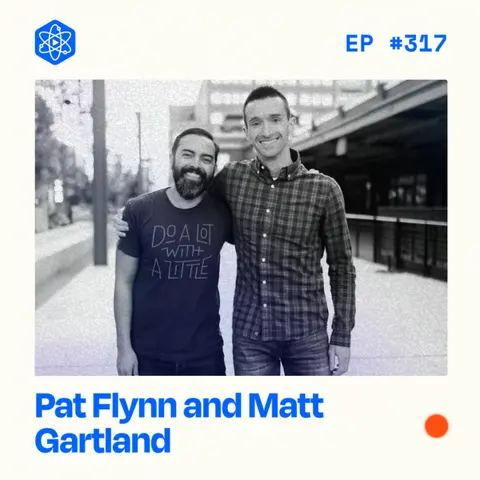
Pat Flynn and Matt Gartland are the former Co-CEOs of SPI Media
This week I’m joined by two longtime friends — Pat Flynn and Matt Gartland.
Pat is the founder of Smart Passive Income, the creator education brand he started in 2008 and ran for 18 years. Matt came on around 2018 — first as an advisor, then as CEO — and spent years making SPI operationally strong enough to stand without Pat at the center. They spun SPI out into a separate entity called SPI Media, pivoted from courses to community with recurring revenue, and quietly prepared the business for a sale they weren’t sure would ever happen. In September 2026, they announced that SPI had sold. The deal had closed five months earlier.
The buyer is Liz Wilcox, an email marketing expert who spent those five months operating publicly as SPI’s “director of community” before anyone knew the deal had closed. The community doubled in size during that window. Part 2 is next week, with Liz.
In this episode, we talk about:
- How Pat and Matt deliberately structured SPI over 8 years so it could be sold — including spinning out a new company, removing Pat’s face from the website, and making the community the hero
- Why Pat turned down multiple VC and PE offers worth more than the final sale price
- The deal mechanics: seller financing, no broker, 160 documents of due diligence, and how it closed in 6 months when deals like this typically fall apart
- What creators who operate entirely under their own name are missing when they eventually want to exit
By the end of this episode, you will understand what it actually takes to build a creator business that could outlive you — and what the groundwork for an exit looks like years before anyone is thinking about it.
- Smart Passive Income
- Liz Wilcox — the buyer (she’s on next week’s episode)
- Deep Pocket Monster — Pat’s Pokémon YouTube channel (2.4M subscribers)
- Built to Sell by John Warrillow — the book that shaped their thinking on making a business sellable
- Superfans by Pat Flynn — his self-published book, part of the deal’s licensing terms
Full transcript and show notes
***
TIMESTAMPS
(00:00) The news
(01:44) The first seeds of the idea
(03:10) The VC and PE offers
(05:52) Building for optionality
(13:20) Running two companies at once
(18:11) Why real partnership is the unlock
(21:17) Who to hire first
(38:16) Why the negotiation wasn’t about money
(40:38) What seller financing actually means
(41:24) The due diligence process
(45:26) The transition strategy
(47:37) Part 2 preview: Liz Wilcox next week
***
RECOMMENDED NEXT EPISODE
#122: Pat Flynn and Matt Gartland – Courses, community, and the future of education
***
ASK CREATOR SCIENCE
***
WHEN YOU’RE READY
🚀 Get CreatorHQ (creator operating system)
🧪 Join The Lab (private membership community)
***
CONNECT
***
SPONSORS
Learn more about your ad choices. Visit megaphone.fm/adchoices
Jay Clouse [00:00:00]:
It sounds so intense.
Matt Gartland [00:00:02]:
I mean, it's not not intense. Thank you, Matt.
Pat Flynn [00:00:05]:
Thank you, Matt.
Jay Clouse [00:00:20]:
Hello, my friend. Welcome back to another episode of Creator Science. This is a big one this week. Let's start with the big news. Smart Passive Income, the brand started by Pat Flynn in 2008, has been sold. If you've been anywhere near the creator economy, you know SPI. Pat started it in 2008 after getting laid off from his job as an architect, and it became one of the defining brands of the online business era. The blog, the income reports, the courses, and the podcast with more than 80 million downloads.
Jay Clouse [00:00:48]:
Matt Gartland was Pat's business partner who came in in 2019 when Pat acquired his agency Winning Edits, and the two of them co-created SPI Media together the following year. That is what has been sold. I played a small role in this story too. SPI acquired my community Unreal Collective at the end of 2020, and I spent about a year and a half there leading their community experience. So I've seen the inside of this business and I've known Pat and Matt for years now. I can't speak more highly about both of them. Now here's why I wanted to make this episode. Most creator businesses can't be sold.
Jay Clouse [00:01:20]:
Not just won't, can't. The brand is the person, the audience relationship is with the person, and there's nothing left to hand a buyer once that person walks out the door. It's the biggest weakness in how most of us build quote unquote personal brands, and it usually only becomes obvious at the time you actually want out. Pat and Matt built a way out and they started building it years before they needed it. So in this episode, we get into how they separated SPI from Pat legally and creatively, starting back in 2018, why they turned down venture capital and private equity offers that were higher than what they ultimately sold the business for. How Liz Wilcox came to be the buyer, which starts with a Pokémon event and a conversation Pat wasn't even a part of, what the deal structure looked like, how you license a person's name, face, and book back to a company they no longer own, and why they closed the deal in April and told absolutely no one until now. Now I know what you're thinking, how much did they sell the business for? We don't talk about the purchase price. We agreed to that before we recorded.
Jay Clouse [00:02:19]:
I'm sorry, it was off limits. But the structure of this deal we get into in detail, and I think that's more useful for you anyway. Next week, I'll be publishing a conversation with Liz Wilcox, the buyer side of the same story. So make sure you're subscribed. We'll get to that full conversation with Matt and Pat right after this. Well, we have news out of the world of Smart Passive Income last week. And for anyone who missed the news, what is the big news?
Pat Flynn [00:02:51]:
Uh, I'm pregnant. No, I'm just kidding. I'm not. Um, Actually quite the opposite. My baby turned 18 and is now off into the world. And by baby, I mean my business. Both Matt and I recently sold Smart Passive Income, which is crazy. And, and it's something I never thought I'd do, but we are here and I'm, I'm very, very excited and also nervous for various reasons.
Pat Flynn [00:03:12]:
But, you know, I have a higher calling, I guess you could say, and I've needed to create space to go fully into that in my life. And, uh, there's so much about this I'm sure you're gonna dig into, but. Yes, sold the company. And I think the first thing that people say is, wait, how did you do that? Because wasn't it a personal brand? So I think we're going to dive a lot into that today.
Jay Clouse [00:03:34]:
It's interesting because Smart Passive Income is the brand. It wasn't Pat Flynn. You have an aura and a brand and a presence and a legacy, but the team has been a team for quite some time. And so what I'm really interested to dig into is How this type of thing can happen, can be modeled? Because I think a lot of people listening to this probably actually don't have a company brand. They very much are operating behind their name. Some people do have a company brand, but in the creator space, the company brand is still often synonymous with the individual. Like, I have Creator Science, but I think by and large, people think of Creator Science, Jay Clouse, one-to-one. And I think that's a similar situation for you.
Jay Clouse [00:04:17]:
So when did you start thinking not being in SPI might be an option?
Pat Flynn [00:04:26]:
There were a few moments that brought this idea up. The first one was actually when Matt and I started to really work closely together for SPI. Matt came on as CEO and really changed the business in a way because it was very much on me. I was doing everything, right? So this is part of the reason why, you know, I hired and kind of had this Aqua hire with Matt and bought his company Winning Edits to bring the team on. And Matt's genius was molding the business into something that could be a lot more operational without me. Not that I was going to be gone from it ever, but rather it was, uh, you've probably heard the book and many of your audience probably has heard of Built to Sell, right? Shaping the company in a way that doesn't require you to have to be there all the time so that you could either take a longer vacation and the business can still run, or in a worser scenario, something happens to you, but the business can still live on. But never was this a thought of like, well, I'm gonna build to sell because I want to sell it. But there have been moments across the years that have brought and kind of seeded this idea.
Pat Flynn [00:05:24]:
The first one was really after Matt and I started really focusing on community. For a while, I was selling online courses back in 2017, cuz that's how, you know, we generated revenue. But in 2020, after really COVID hit and we saw the need for community, we brought that online with SPI Pro. And almost immediately after that, people started reaching out to being, not just saying like, wow, this is amazing. You have recurring revenue in your business now. But we had a few offers pretty early on.
Jay Clouse [00:05:52]:
Oh, wow.
Pat Flynn [00:05:52]:
From venture capital. Ah, you know, it was very easy for me to say no to that because I knew exactly what they wanted and what they were going to do with it. I've seen it in some of my friends' businesses where VC money has come in and then control was lost. And then those businesses, many of them dissolved or have just become something completely different. And I didn't want to do that. So it was very easy for me to say no, even though those offers were quite high. I very much cared about the legacy of the community and what we were building, and I would want that to live on and be operational whether I was still there or not. And that's how we built it.
Pat Flynn [00:06:23]:
And very much credit to Matt for shaping it that way. But those were the first little seedlings of, I wonder what life would be like if I were to move on. Nah, no, I love this. This is what I'm going to do this forever. But then Really what ended up happening was another hobby ended up taking off in my life and becoming something that I was balancing among SPI in terms of creation and business and opportunity. And this is the Pokémon stuff that has now taken off and has kind of exploded. And for a while I was kind of straddling 2 ladders again, just like I was when I was working 9 to 5 and becoming a business owner back in 2008. And, uh, my thoughts were, I could do it all.
Pat Flynn [00:07:01]:
I can do both. Yes, I can absolutely crush it by taking on everything. And, uh, soon realized that that was not the case.
Jay Clouse [00:07:08]:
I'm going to ask Matt a couple of questions about like the structure of the company when you came in and shortly after here in a second. But I'm super curious on this venture capital point. Do you mean literally venture capital? They wanted to invest and grow the business with you running it or private equity? Like they wanted to buy a majority or controlling stake?
Pat Flynn [00:07:26]:
Both, both. We've had, we've had both kind of offers, but, but when it came down to it, I mean, these people didn't even know who the audience was. They just saw the numbers coming in. They saw the on-paper revenue and just saw an investment opportunity. And also down the line, probably saw the email list and customers as just more money for them down the road. And that was not anything that I was comfortable with. I don't know, even though those offers were much higher than what ultimately the business sold for, I wouldn't have been able to sleep at night. Really, because this is again my baby and this thing that I grew and my name, even though I'm no longer with it, I'm still attached to it.
Pat Flynn [00:08:02]:
My DNA is in there, if you will. So I didn't even really go deep into the exploration of like, well, okay, maybe this venture capitalist would do something good or be the right move. It just immediately was a no to me each time.
Jay Clouse [00:08:16]:
Super interesting. Okay, so Matt, when you came on board, when Winning Edits was brought in and you started thinking, okay, team, more sellable business? What did that look like? And maybe with the benefit of hindsight, what do you think should have been done or could have been done?
Matt Gartland [00:08:34]:
Yeah, the entry point, Pat kind of mentioned it, is legacy. So like when we were talking back in, I think the conversation actually started more in like 2017 going into 2018 about like what's the next generation of SPI? You know, at that point, you know, Patrick, we'd actually been working together since 2012. and became friends, became almost like a pseudo business partner to Pat sort of in the early era. And then as things were evolving rather rapidly, actually kind of in the 2018 era, we were doing multi-seven figures a year in DIY core sales. But, you know, we started to see in the numbers on that front, you know, things were changing already. We were always a little bit ahead of the curve on some of that stuff. So in terms of then like what could be possible and what's our sense of legacy with this project, you know, and I wasn't, again, officially a partner yet, But it's like, man, what if we did actually, you know, partner up and kind of like tie a knot, so to speak, you know, in business, and create something that had some optionality to it that could open doors and give us choice down the road in terms of like, what could this then be in terms of something that contributes value beyond us, that could be of interest in different regards to either potential buyer types, as well as just other versions of like what the future is, right? And we're not necessarily locked into like a personal brand or whatever. So it was all initially around like vision and legacy.
Matt Gartland [00:09:50]:
We ended up kind of producing a baby, so to speak, which I love that metaphor that Pat had mentioned. And this gets into even some of the structure stuff, Jay, that you're asking, which was all the SPI assets were actually sort of enmeshed within Pat's parent company. It was all one big company that had a lot of things going on in it. So to create some of that optionality and to improve its, I'd say, defensiveness, if and when opportunities came around to talk numbers and to talk about IP and other asset types, it's like, okay, we need to clean this up. So we actually spun it out and we created and co-founded a new company called SPI Media, at least legally, right? But it was a very distinct new thing. And that was sort of the underpinning of then this kind of business transformation more in the background of what we were doing to improve on economics, create recurring revenue specifically within the business, begin to optimize different aspects of the P&L to safeguard other parts of the brand. And also, it kind of even come back around to yet again, kind of the personal brand, try to bring other people into the brand. I mean, Jay, we brought you in for a period of time, for gosh sakes, right? And you became a really important part of our brand for a period of time.
Jay Clouse [00:10:54]:
Absolutely.
Matt Gartland [00:10:55]:
We brought in, my gosh, like Jason Pfeiffer and Terry Rice and other really marquee experts in different areas of online business and whatnot for a period of time. There was an era where we were talking about it as like the Avengers, right? Pat is Iron Man. Right, he is front and center, but we're trying to surround him with other key people to, again, add more value and richness, you know, to the brand. So we did these things from 2018, definitely 2019, all the way through to now. And it's been able to, for sure, allow us to have the opportunity that we did have to sell it to Liz.
Jay Clouse [00:11:27]:
There's a comment you made there that I wanna dig into a little bit because I think it might be an actionable takeaway for folks listening to this, because what is probably true for everybody listening to this, no matter what stage of personal brand or company brand they're at, They probably have everything inside of one LLC. So as you were thinking about what becomes SPI Media, what stays as a Pat Flynn property, how did you think about where you draw that line?
Matt Gartland [00:11:55]:
Yeah, I did think about it, and Pat and I discussed, again, with the end in mind. So like, what would genuinely be clear assets, not to be too wonky with that term, but like, that could move to someone else and have value to someone else that didn't then also impact Pat in some adverse way. So take his books, for example, right? His books are not a part of SPI Media. They are Pat, right? Now, the books are used, his legacy books anyway, especially, right, as vehicles of promotion, you know, for SPI, absolutely. But we intentionally carved that out when we were doing the shaping, you know, of what that business was gonna become. Pat's personal social media channels, also, those are his personal assets. They're not a part of the business. So actually, I don't know, Pat, you could weigh in, but I don't think it was actually that complicated in terms of how we gave initial shape to kind of the dividing line around those things.
Pat Flynn [00:12:47]:
Yeah, not really. I mean, it was kind of based on, okay, well, what's the team going to be working on? And okay, that's SPI Media. What are the projects that I've worked on that I'm going to continue to work on myself that don't involve the team? Like the books and, you know, the social media stuff, which, which I've never let anybody else touch. That was very clearly going to be living with me. But again, there was no sort of like, when Matt says like the end in mind, I think the word optionality is the key there, not necessarily to sell. But again, if something were to happen to me, or if maybe Matt took over the company completely, or whatever the case may be, I think Matt's being too kind also in terms of how messy everything was before he came on. It was a Frankenstein kind of project, right? Over 10 years, you build something. Oftentimes it's just like Band-Aids over Band-Aids.
Pat Flynn [00:13:37]:
And Matt came in and really cleaned things up, especially on the ins and outs of the finances and the business structure and all that stuff. So that's very much Matt. You know, what you're seeing here is a pair that works well together. This is the visionary and the operator, or like the book Rocket Fuel, right? The integrator, as they say. And I just got very lucky because Matt was also a visionary as well. So I got a, I got a sort of 2-for-1 deal with him. But yeah, again, the sale idea kind of came in fairly recently. I mean, it wasn't that long, generally speaking, from the moment that Matt and I were like, yeah, let's explore what this might actually look like if we were to, you know, sell this to the point of sale, because it was actually the buyer's sister.
Pat Flynn [00:14:21]:
Her name is Patricia, who worked with me on the Pokémon side of things.
Jay Clouse [00:14:25]:
Whoa.
Pat Flynn [00:14:27]:
Who started to help me on my events. So I run these live events called Card Party in the Pokémon space. We had just recently about 9,500 people in Fort Lauderdale at one event. Our 6th event just happened. But in our, I think, 3rd event, Patricia was there to help and manage and kind of just keep me focused along with my own assistant, Jess. And she saw me answering emails and doing some work for SPI in between the stuff that I was supposed to do there at the Pokémon event. And so apparently she brought that home to the buyer, her sister, and said, whoa, Pat's like doing so much. He's so exhausted.
Pat Flynn [00:15:05]:
He's trying to balance SPI and the Pokémon stuff now, which is blowing up for him. What would happen if you took over SPI? And it just became this random half thought. That then turned into a conversation between her sister, now the buyer, and us. And 6 months later, it was sold.
Jay Clouse [00:15:26]:
Can you talk about this period of your life a little bit, Pat? Because I'm running one company and we've brought in more and more members of the team this year. And the number of deliverables I have to the team, to partners in one company, is overwhelming on a weekly basis, and I haven't uploaded to YouTube in 2 months because of it. And here you are contributing creative work to 2 companies that are publishing like crazy. How did you do this? What did your day-to-day look like? Are you able to just sit down and grind out content for hours straight?
Pat Flynn [00:16:02]:
Uh, now I can, yes. And it's because I love the content. I love doing that. That is something that I've always been passionate about. I'm a content creator at heart. And if you were to go back in time into 2008, into the blog, and then when the podcast started, I just loved to create. And then of course, Matt comes in from the outside. You know, you can't read the label when you're inside the bottle, as I say.
Pat Flynn [00:16:23]:
He goes, whoa, content, amazing business and organization. Ah, needs help. Let me come in and rescue. So that's kind of where he came in. And this is exactly why SPI and the way it was eventually structured, thanks to Matt, thanks to the team, thanks to SOPs and operations and workflows and Notion and like all the things we use, that bought me time back to then put into something else. And I didn't know that the Pokémon thing when I started with my kids in 2020 was going to blow up in this way, but I saw a lot of opportunity there, leaned into that more. And here I am sort of like balancing both of these things at the same time. And what's really nice about the way SPI eventually became structured after we started focusing on community was that our marketing, even the podcasts and our guests, those things were now focused not just on me anymore.
Pat Flynn [00:17:14]:
We actually turned the lens around to now focusing on the community. Our guests on the podcast were from the community. Our marketing featured the community. We even changed the website and removed my face on it to then put the faces of our community on it and to show them and to make them the hero of the story, right? As you know, Don Miller would say, StoryBrand 101, we really story branded. our brand in that way. And so that also removed a lot of the pressure on me to create for SPI and allowed me to then add more pressure on the other side and focus on the Pokémon stuff. Which again, just to kind of give you a sense of like how big that has gotten, the YouTube channel Deep Pocket Monster is about to cross 2.4 million subscribers. We published a video the other day that within 2 days saw a million views.
Pat Flynn [00:18:02]:
And has an average view duration of about 40 minutes. Our videos are quite long. They're sort of movie length. Also created a short-form channel for the Pokémon thing where I open a pack every day and I have a jingle that goes along with it that has gone pretty wide called Should I Open It or Should I Keep It Sealed? We're seeing about 12 to 14 million views per day across all platforms, and that in and of itself is generating a 6-figure revenue, just the Shorts channels alone. Not to mention the brand deals and sponsorships. And it's really interesting because a lot of the stuff I learned at SPI, from how to build relationships with businesses to building community to all the things we do at SPI, I'm now doing on the Pokémon side of things, but it's just 10x bigger because of the ceiling that's possible with an entertainment type of channel versus just in the business, uh, channel side of things. So probably a lot to unpack there.
Matt Gartland [00:18:54]:
Hey, Jay, can I pull on a couple of things? Is that all right?
Jay Clouse [00:18:57]:
Yes. I have a quick follow-up though, because part of me just wants to be like, I still don't quite get it because when I was on the team, I was in marketing meetings, I was in leadership meetings. You were on a lot of these calls. We would say like, oh, we need Pat to record X, Y, and Z. And then I would see the podcast team is like, we need intros for A, B, C. And you were doing the Pokémon Channel then. I just— the math doesn't math for me. Like, do you sleep? Let me—
Pat Flynn [00:19:21]:
maybe I can give you a little bit more color. One of the best things we did, this is very actionable. for everybody here. We have a Slack channel at SPI and it's called Pat Content Request. All team members have learned to, when they need something that I need to put into creating, the requests go there and I see exactly who creates it. I see exactly when the deadlines are. And that is the one and only spot I go from SPI before I sold it to go and go, okay, who needs what and when? And that was it. And then what I would do is have scheduled times during the day that were purely focused on just getting to the next things on that particular Slack channel.
Pat Flynn [00:19:58]:
That was a huge game changer for both the team and for me to make sure assets were created in time. And then I, I do utilize batch processing. So I do have high focus and high sort of like flow state when I'm in content creation mode. If my family comes in and they see me, like, I don't even know they're there because I'm just so focused in on that. I've gotten to learn how to. Really, I don't know, I don't want to sound too woo-woo, but like my energy and my flow, I've really tapped into that when it comes to creation. And I know when to do it and how and where to focus because of those things, like in Slack, for example.
Jay Clouse [00:20:34]:
Okay, Matt, sorry, go ahead. I just wanted to press on this because I'm like, I just don't know where the time comes from. And maybe it's because we have a toddler and my wife is also pregnant. And so it's just like, this is a hard season of life, but it's like, yeah.
Pat Flynn [00:20:45]:
I mean, my kids are 16 and 13 now. I have a lot of time back from what I once didn't have time for because my kids were your kids' age. Anyway, Matt, go ahead.
Matt Gartland [00:20:54]:
I was gonna try to contribute part of an answer, at least from my perspective, is his partnerships. And I'm certainly quite proud to be one of them. You know, Pat is a person that is a freak of nature, of course, when it does in fact come to content creation. But thinking about like his book, he wrote another book that became a New York Times bestselling author last year, in addition to all the things that you did name.
Jay Clouse [00:21:16]:
Right?
Matt Gartland [00:21:16]:
But he has—
Pat Flynn [00:21:17]:
That's true.
Matt Gartland [00:21:17]:
You know, a publishing team and partnership sort of there. And it's one thing, Jay, I wanted to even pull out for anyone listening that maybe cares to get another spicy take, but it's like, I think too many personal brands and solo creators don't take seriously the possibility of partnership, like a real partnership, and not just finding an OBM or VAs or whatnot. I mean, those are good things too, but like, I think in terms of some of the bigger themes that we're starting to hit on today around what is the endgame and what does optionality look like down the road? And how do you sell a creator business? And these kind of existential questions. Kind of a cheat code or an unlock is like, can you find a real business partner or explore partnership in a much more meaningful way than just having individuals that are executors, right? Just doing a task that you ultimately then have to manage. I mean, there's so many folks that I think we all know in common that are doing quite well, but they're still now managing their teams because they don't really have a business partner or more of an equal in the process, if that makes sense.
Jay Clouse [00:22:15]:
Yeah.
Matt Gartland [00:22:16]:
And that can trap your time. It actually can be a counterproductive thing as creators scale and grow is, man, I don't come from maybe a business background or team leadership or culture development, all of these things that if you don't have maybe some reps at these things, but you are trying to then build a team and scale a team with the intent to like get time back, it can actually sometimes go the other way. So to Pat's credit, like I think you've been incredibly intentional on almost all tracks of your pursuits to have like really great partners involved. Even Card Party, you have a great partner in. Like, that's not just all you, but you're able to be in your zone of genius with Card Party because Dan helps out on the logistics of it.
Pat Flynn [00:22:55]:
Yeah. I mean, I appreciate you calling that out, Matt. I mean, it is the people that I've surrounded myself with that have helped me just stay in my zone of genius. On the Card Party thing, I have partnered with Dan Franks, who is the founder of Podcast Movement. They run events all the time. And so I was like, hey, you run events all the time. You know how to make everything smooth. And I will just come in and on your blueprint, I will add in the Pokémon and entertainment and sponsors and creators.
Pat Flynn [00:23:20]:
And you just make sure everything flows the way it does. And it's worked out really well. So I don't have to think about how to put the event together. I can just focus on the relationships and the people and the creators. With SPI, I mean, yeah, I eventually got to the point where I was in very little meetings where All I was doing at SPI was only the things I wanted to do at SPI. I just wanted to create. And so Matt and the team and Sandy on the marketing side and Kristen with a lot of operational stuff, they've been vital for me to then again, not feel bogged down or feel like, yeah, 'cause I wasn't doing it all. I was hardly doing anything I feel like sometimes, except the things that I wanted to do.
Jay Clouse [00:23:59]:
After a quick break, we'll talk about team building and then we get into the weeds the unique approach Matt and Pat took in structuring this deal. So stick around, we'll be right back. And now back to my conversation with Matt Gartland and Pat Flynn. Well, I want to talk a little bit more about team structure, and then we'll talk about deal structure, because increasingly I'm thinking about team building, and I've talked to Angus from Ollie's team about what they've done, and that's certainly evolved over time. The challenging thing for me to wrap my head around is like, if you are bringing on key team members that you want to be full-time, but you're in this period where like cash-flowing full-time salaries, you just can't do that many. What do you think? And maybe this is a question for you, Matt. What do you think is a good way to think about team incentives and compensation in a way that is Sustainable if you're trying to team build like this?
Matt Gartland [00:24:59]:
Yeah, critical question. A few different thoughts that can all stack or kind of be dials you turn in some combination. One is that you don't have to rush into full-time salaries out of the gate, right? There's increasingly, in my view, and have a lot of conversations with other professionals and consultants and creators about it, it's just the rise of the fractional class with more job displacements, at least traditionally speaking, in say the corporate world and other things. there's great people that just want to be fractional experts in XYZ area and don't necessarily, at least maybe not initially, want just another W-2, 9-to-5 sort of a job. So it's very possible to find, at least with discrete areas of your team model, whatever that team model looks like, which is by itself, you know, a talking point of like, what is your org design? But then you could look for just fractional resources to kind of slot in there. And one of those folks could be— something of a fractional operator, right? So that, you know, you mentioned Angus, a friend of mine as well. You know, someone like him is, yeah, a great operator. He's not fractional with Ollie, but you could get someone like that, or at least pursue that as the beginnings of team building to even as the founder creator, kind of get your sea legs underneath you.
Matt Gartland [00:26:06]:
Like, especially if that's your first time building a team, how do you lead a team? How do you communicate with a team? How do you motivate a team? And that ties back to financial incentives as well. Like, how do you roll that out? How do you communicate the value of, say, a profit share program?
Pat Flynn [00:26:19]:
Right?
Matt Gartland [00:26:19]:
You have to put numbers in place, you have to do modeling, and that would dovetail down a different rabbit hole of all the fun finance things I could nerd out about. But, you know, start, I guess, a little bit small, start fractional. You could also start contract to hire is a very common sort of an approach where you bring someone on, you know, as a 1099 contractor. But the story, if it's relevant to both parties, is like, hey, we're gonna do a 9-month engagement or less, and, you know, here's how we're gonna evaluate both sides of the relationship. And the exploration is to like tie the knot, like, and bring you on full-time if the business continues to perform in the way that it is based on patterns and trends, and the assumption that you're gonna like it here and that I'm gonna like you, and just all of the things that kind of go into that version of our relationship. So contract to hire is very normal. You know, certainly some mechanic, financially speaking, around upside in the business. You know, we did bonus programs at SPI in different regards, you know, in different eras of time.
Matt Gartland [00:27:13]:
Having a financial discipline is required in my view. And yet another spicy opinion is that not enough personal brands and creators, I think, take that side of the business seriously It even has bearing on longevity. You know, how long can you keep a creator business going? Can you even get to a point in time down the road where you can even entertain optionality to keep it going or to pass it off or to sell it, right? I mean, the cash flow is the lifeblood of any business, period, full stop. So if you're not paying attention to it, if you're not trying to control that or manage that in some way, in healthy ways, that's really risky. So the more that you can bring a team into the consequences of that, maybe find someone to take on financial management for you if that's not your thing, and it's very normal for that not to be a creator's thing, then yes, as the upside happens, I'd say like a profit sharing mechanic is probably a good first step. You could structure that into what's called a waterfall. So as cash accumulates within the business, you have like kind of unlock points that you would put little formulas against to then like unlock bonuses at certain thresholds, right? And then depending on the size of your team, yeah, Ollie has a much larger team than others, for example. So you'll have senior members of the team, you know, leadership, you'll have regular members.
Matt Gartland [00:28:23]:
So you can find different incentive classes there in terms of percent allocations on cash in the waterfall. I'm going way nerdy, but— I like it. Yeah, like that's kind of the road. So start small, find some fractional people, and start to get your financial ducks in a row.
Jay Clouse [00:28:38]:
How would you think about the first person who's not fractional?
Matt Gartland [00:28:41]:
I mean, I'm biased, but probably someone that's operational, right? Someone that has sort of a wide surface area of skill and judgment, and I'd say communication ability as well. Like, good operators are great communicators, and being able to then communicate back to, like, me communicating with Pat, and being able to even, like, argue back to him, or at least make a counterargument, and let's debate and even spar in a way, right? Like, okay, like, is this genuinely a good decision for the business, or is this not? Here's what I think could go right, but here's what could go wrong. Let's just at least have an honest conversation about this. things, at least of consequence. Hey, we want to build a whole new product. Okay, it's going to take this much time, and we'll have to contract with some third-party resources, videographers, or whatever the project is, right? So here's the cost implication to that. What do we think is really plausible in terms of the return on that short-term, immediate, with the first launch, as well as like, what's the thesis on like, what does that add to the business going forward? Is that truly strategic? Are we trying to really shift our revenue allocation from X to Y? I mean, Pat and I, Talked about that a ton when we started to move into community-based learning, right? When we decided to very carefully, but very deliberately cannibalize a multi, multi-million dollar business on course sales, DIY course sales that we were selling on Teachable at the time, and we cannibalized it to zero because we were building up recurring revenue and we built on Circle, like the lab runs on Circle. And we did it systematically and strategically.
Matt Gartland [00:30:11]:
So yeah, you got to be able to have a person like that. And I think that is your most valuable internal weapon to think about in terms of your team design. They're going to be your anchor.
Jay Clouse [00:30:20]:
I think back to this conversation I had with Nathan actually at this author's retreat. I was talking to him about hiring and he said, if you buy half of somebody's time, you get a quarter of their attention. That's my biggest fear, problem, lived experience with fractional folks is it is just necessary that they will be dividing their attention. And somebody who's more full-time is going to give you unintentional shower time and walk time, you know, like they can't help but. And maybe you get some of that with some fractional folks when they have an idea that comes up. But I have noticed having Ana on the team just working with us right now, I'm like, I can see that We're getting extra just thought space from her and it's so valuable.
Pat Flynn [00:31:08]:
Yeah. I experienced that when I bought Matt's company, Winning Edits. I was one of their clients. So of course, just by the nature of being one of several clients, I did get a part of their time, but I was their biggest client. And I said, you know what, just let me, let me buy the company and have all of your time and the employees and come work for me. And you're right, Jay. I mean, I noticed not just like a more productivity, but just their whole life was now—
Jay Clouse [00:31:38]:
There's like creativity in it too.
Pat Flynn [00:31:40]:
Yeah, they're like they were having shower thoughts about the company, right? There's that sort of added, you know, element. Not to say again, fractional is not good. That could be where it starts. But I think that ultimately getting people to come in and be just fully focused on what you have going on is, is eventually going to be the best case scenario. I think in terms of who do you hire first or who might that hire be, I think it really comes down to, well, what do you want to do that only you can do? Do what you do best and delegate the rest, as Chris Ducker says. I've really loved that and I've sort of taken that to the extreme with SPI, but it has been very freeing and it's allowed me to stay in this business for 18 years. It's one of the longest lasting sort of entrepreneurial educational brands that, you know, started back in the heyday of blogging that was still around. And it's still around.
Pat Flynn [00:32:30]:
And with the new buyer, Liz, I want to give her a shout out, Liz Wilcox. I mean, we got so lucky. She's the perfect person to take this baton and not just keep what I started going, but really take it to that level that even I can't take it anymore, partly because I have these other callings in this new venture that I'm setting out for, but also just. I've put as much as I can into that. And to see her now getting excited like I was back in '08 with SPI and the community there, I think this is going to be something where people come back in the future. At least this is the idea. And they say, Pat, selling to Liz was the best thing you did because it is thriving. And already, even just 6 months after the purchase, because that happened in April of 2026, we've just announced this in September because there was a little choreography with how we wanted to set her up and You know, if I came in in April and said, hey guys, the business is sold, like, here's Liz, like, she's going to be great.
Jay Clouse [00:33:22]:
Trust me, bro.
Pat Flynn [00:33:23]:
No, she's already had 6 months to prove herself and the community has already doubled in size. The activity in there is up 400%. People are loving it. I've gotten private messages even before people knew I sold this saying the community is more lively than it's ever been. So I'm very happy because again, finding the right person to take the baton and take it to that next space that even I couldn't. This is best case scenario. I mean, honestly, I feel so lucky.
Jay Clouse [00:33:45]:
And spoiler, we'll have Liz on the podcast next week to continue this conversation from her side. Do you think that having the company named Smart Passive Income and not Pat Flynn enabled this outcome? I guess stated another way, do you think that people who are operating purely behind their own name lack this optionality without creating some more third-party brand?
Matt Gartland [00:34:09]:
I don't see it as binary, but I think it is a notable disadvantage. Yes.
Jay Clouse [00:34:15]:
Okay. Interesting. So tell me more about that. And maybe this is a good segue then into what this deal structure looked like. And for anyone who's listening, who's screaming like, how much did it sell for? We're not going to talk about it. We talked about this offline as something we're not going to talk about. We're not going to talk about it. I'm not just ignoring it, but I want to talk about the deal structure.
Jay Clouse [00:34:33]:
And so maybe the conversation of Why it's a disadvantage to be behind your name can segue us there.
Pat Flynn [00:34:40]:
This is such an amazing debated topic in our space because especially today, people connect with people, right? So if your name is there, the domain name, and your face is there, it's going to be easier for people to connect because it's not AI. It's, it's you, right? And people connect with people. However, if eventually you want to let go or move forward from the thing that you are creating, then if it is your name, I mean, that's gonna be really difficult to sell. There are some creators out there who I know who had built businesses on their name, but then used that name to launch new businesses that weren't their name, certain products or certain companies. I even think of something like LeadPages from way back in the day from Clay Collins. He had built a software and he used his own personal brand that he created to launch it and build it, but then it took on a life of its own and it kind of moved forward from there. Spencer Hawes from Long Tail Pro did the same thing and a number of other businesses. And I think, you know, you're seeing different creators go back and forth, right? There are creators who had podcasts that were, you know, online business podcasts.
Pat Flynn [00:35:48]:
Now it's Amy Porterfield Show, right? So it's going the opposite way in some cases. And I think it really depends on your, your goals, of course, but it is a debate. But I do feel like in terms of eventually, if you want to get to a point where you could let go or move forward from or sell this thing, then it becomes much more difficult if your name's attached to it. But there are some examples like Dave Ramsey's got his Financial Peace University. That's an example of something that he created that then even other people teach. They're teaching Dave Ramsey stuff. His name's on it, but it's not him teaching it. And so I think a lot of creativity is required when it comes to kind of where you want to go and, and how the name lives on or not.
Pat Flynn [00:36:27]:
And kind of where you choose to go from here.
Matt Gartland [00:36:29]:
Yeah, I think a really powerful and really interesting and also hotly debated topic that stitches into what Pat said is this notion of a portfolio career. So as a creator, someone that has a personal brand and channels and things, being able to consider different avenues of just career ventures, right? So Pat has published books in addition to any number of online businesses that he owns or co-owns and has partners with. And then together, Pat and I have been co-advising tech companies also for however many years now, right? Many years, which is another thing that we've been able to do in relation to Pat's personal brand. I don't have nearly the personal brand that like you guys do, but I do more of my stuff kind of privately. But like the notion here is to like think about a collection, like a deliberate portfolio, like a body of work, right? So being able to then like have your personal brand still allow for that, and then the things within your portfolio to try to stand on their own. So like SPI is a thing within Pat's portfolio, SPI is a thing within my portfolio, and we have done the deliberate stuff going all the way back to the boring but really important stuff of business formation and the legal underpinnings and everything else to put us in a position where we can sell off that asset out of our portfolio if the circumstances, you know, align like they did for us, right? So yeah, this portfolio concept I think is increasingly something of real, of real, like, not just intrigue, honestly, like leverage, you know, as creators are thinking about like what could be next for them, or how do I build some diversification into my career? And not just, again, from like a finance standpoint, that can get stuffy, I realize, but even to pass like creativity, to have like diversity in pursuits, right, is a really important thing to kind of keep that motivation, that drive alive. And to even sharpen it, I would think, Papa, you could speak to it. It's like these new pursuits that you have had, you're constantly improving your own skill.
Matt Gartland [00:38:24]:
I mean, you're a master at the skill already, but you're constantly even getting better by having a portfolio career.
Pat Flynn [00:38:30]:
Yeah, I mean, each thing has been almost a stepping stool to the next, you know, to the next, to the next. I do like that portfolio analogy. I mean, even on the Pokémon side of things, right, it's still Pat Flynn is Deep Pocket Monster. However, Card Party, the event, is about the community, right? It's not about me. I'm just the host for now, but that is something that was intentionally built in a way that was not centered around me. However, I'm the driving force behind how it launched and the marketing behind it, but that is something that could be easily sold off and will potentially happen one day. Who knows? But yeah, portfolio or patfolio.
Matt Gartland [00:39:03]:
Jay, I'll, I'll, I'll bet it back quickly to, I think where that point started, which was like deal terms. So What we were able to do, we had to do it, but it would be orders of magnitude more complex, is just licensing of Pat's personal brand. So like in the deal that we struck, we had to figure out mechanics, deal terms, specifics around how that would continue to work on a certain amount of time, timeframe, right? And for what purpose. So there was very deliberate work done on that point, even though like— Pat's personal brand assets aren't going with the sale, because again, we were good about that and had a clear delineation of that. But for a period of time, there's still the license, the right for Liz to use some of Pat's work, Pat's name, image, and likeness, very specifically Superfans, which is one of Pat's really successful books, and the methodology from the book. Those were very specific terms that I was very careful when I did the whole deal structure, to make sure were carefully considered and baked in. And that was complicated enough even with the deal as it was, where it wasn't, again, Pat's personal brand. But if you could imagine if it were, if there were no SPI, and if it was only patflynn.com, and everything was just Pat Flynn, that would've been a lot harder to try to structure licensing, economics around licensing, timeframe and sunset provisions related to licensing, et cetera.
Jay Clouse [00:40:27]:
Hypothetical question that probably matters to one listener out there. Superfans was self-published, correct?
Pat Flynn [00:40:34]:
Correct.
Jay Clouse [00:40:35]:
So if Superfans was traditionally published, would you be able to license material from Superfans in this sale? Maybe you guys don't know, but my understanding is like a traditional publisher owns the IP in the book and you have to license from the publisher to even use it yourself in some ways.
Pat Flynn [00:40:50]:
Yeah, potentially. I mean, again, another case for—
Matt Gartland [00:40:52]:
By default, I believe that's correct.
Pat Flynn [00:40:54]:
Another case for self-publishing. And even though I did traditionally publish my latest book, Lean Learning, and it did become a New York Times bestseller, I would still personally now self-publish from this point forward.
Jay Clouse [00:41:06]:
I'm not going to take that bait. We've got to keep going on the deal structure. Okay. So, okay. So what you're saying is Liz didn't step forward and give you a giant briefcase full of cash and say, here it is, give me everything. No, no.
Pat Flynn [00:41:19]:
But that's like what you dream of, right? When you, when you do these kinds of things. No, it was, it was very organic. And what was really interesting about like the negotiation part of this, Was 99% of the negotiation was not about the money. It was literally, is this the right fit for both of us? Liz just basically interviewed me for hours on who the audience was and what the dreams of them were and what their obstacles are and all those kinds of things. Because what we found is that her audience that she's been building on lizwilcox.com is exactly the same. She's targeting the exact same audience. And a lot of conversations were very deep into where she wants to go and what this means to her, right? This is a way for her to fast forward where she ultimately wanted to go because she's very much in the world of email marketing. She's an absolute expert in that.
Pat Flynn [00:42:09]:
But she has one community for $9 a month with 5,000 people in it. Imagine if she had other offerings on top of that, right? Which is where, okay, maybe SPI would be a nice sort of step 2 for a lot of her members. or something much bigger. So again, a lot of conversations were about just who we were as people and our values and our mission. And that was the coolest part and, and why I kept wanting to have conversations about this. Because honestly, if those first conversations were just about money, it would've probably been a signal to, to me to just, you know, okay, well, I, I know why this person's here. So that was really important to me. And, you know, the money part of it, Matt is the mastermind behind most of that.
Pat Flynn [00:42:48]:
And a lot of that was not. anything other than just spreadsheets and numbers and mathematics, or Mattmatics as I call it. And it just made it very easy so that when the number was presented, it was like, oh yeah, that all checks out and makes sense. There were, there were, there was very little like, well, that seems high, or for us, like, oh, this seems low. It was just like, well, this is the number and there we go. And then payment plan structure and all this kind of stuff. I'm sure Matt could dive into that a little bit more, but it all made it possible and very easy actually.
Jay Clouse [00:43:16]:
Super curious to hear more of that, Matt, because I'm imagining in my mind, I'm like, is this seller financing? Is this like a mortgage? Because this may be interesting to even people listening who are like, maybe I want to acquihire some existing asset that complements what I'm trying to do, or maybe I'm not even fully in this world yet, and this would give me a leg up to start if I go and find some asset out there that might be able to be acquired.
Matt Gartland [00:43:40]:
It did start there. Pat's dead right. You know, we wanted to ensure because of the things we've hit on today, legacy fit what this is going to continue to be, hopefully in terms of a body of work that adds value to the creator economy going forward. You know, that was critical. The first several calls, numbers of any variety did not come up in conversation. And then we did very rigorous financial due diligence. We were asked for at least 160, I'm not kidding, 160 different documents or certifications or verifications of this, that, or the other thing. And I'm blending together financial and non-financial records and proof points and tax returns and articles of incorporation and operating agreements and contract agreements and vendor agreements.
Jay Clouse [00:44:26]:
Is this through a broker? Was there a broker involved?
Matt Gartland [00:44:29]:
There were lawyers involved.
Pat Flynn [00:44:30]:
Okay.
Matt Gartland [00:44:30]:
No broker, no broker.
Jay Clouse [00:44:31]:
But there were— But somebody is determining what documents need or they want to see.
Matt Gartland [00:44:36]:
Yeah, we supplied voluntarily a really healthy list of records that included financials. And then later on in the process, which is not uncustomary, her attorney asked for a lot more. So we obliged on most of those. And then there's a few that we could reasonably disposition to say, this isn't credible, or this isn't necessary for X, Y, or Z reason.
Jay Clouse [00:44:59]:
It sounds so intense.
Matt Gartland [00:45:00]:
I mean, it's not not intense.
Jay Clouse [00:45:02]:
Thank you, Matt.
Pat Flynn [00:45:03]:
Thank you, Matt.
Jay Clouse [00:45:05]:
Yeah.
Matt Gartland [00:45:05]:
So Yeah, but again, Pat's just not a part of any of that. Not to hit— well, I'm not criticizing him. It's just like, nope, nope, I got it. I got it. But yeah, it was easy. Pat said it was very smooth. And still, she approached us, I think first point of contact was August of last year, and we closed in April.
Jay Clouse [00:45:22]:
Oh, wow.
Matt Gartland [00:45:23]:
So that's 6, 7 months. This is my 4th exit, the smoothest and fastest one. So if you don't have your stuff in a row and organized, and you're trying to then go through this, and you're not prepared, and you can't just produce 160 records. Now, we didn't do it overnight, believe me. This is how like deals become 12 months, 18 months, if you could even keep working it, right? And get more complicated, and then that much more expensive if you have lawyers involved, right? Helping to do these deals.
Jay Clouse [00:45:52]:
And a lot fall apart like late.
Matt Gartland [00:45:53]:
Of course.
Jay Clouse [00:45:54]:
And then both parties would just be out the fees and time during the process.
Matt Gartland [00:45:58]:
Darn right, yeah.
Pat Flynn [00:45:59]:
Maybe you could speak, Matt, to financing. I think that's, again, to Jay's point, I think that's a lot of people are going to be wondering, like, can I do this and how might I get creative with how I pay for that?
Jay Clouse [00:46:09]:
Yeah.
Matt Gartland [00:46:10]:
So seller's financing, yes, that's what it ended up being.
Jay Clouse [00:46:13]:
What does seller's financing mean for somebody who doesn't know what that means?
Matt Gartland [00:46:16]:
Sure. It means that buyer doesn't arrive on closing day with a suitcase full of cash, right? So if you're not going to find that sort of an outcome, then what sort of financing does then have to be brought to the table to get to the ultimate purchase price? There's always something due at close. So we had a percent of sale, you know, a smaller percent, but still a percent at sale.
Pat Flynn [00:46:36]:
Kind of like a down payment?
Matt Gartland [00:46:38]:
Yeah, like due at close, much like if you buy a house, right? It's like, okay, you have closing, you have closing costs, there's something due at close, right? So we had that in our model. I worked up the whole enterprise valuation model, the EV model, and proposed a range of options of different thresholds and different percentages over different timeframes. And we led with that. We made the choice together that, okay, Liz is the right person. You know, she's had success, she's done other deals, you know, she's a very credible business person. And still, we're not gonna ask for anything, we're not gonna ask it all upfront, that'd be ridiculous. So like, let's just volunteer some different options. So we did, we led with that.
Matt Gartland [00:47:14]:
So we had a very then natural, conversation around 2 years, 3 years, 4 years, 5 years in terms of the seller financing, which is all just the terms. And then there's different levels of interest that get applied over different periods of time, right? That then becomes not really a negotiation, it's just more, okay, what makes sense more maybe buyer side on some of the extra interest and whatever that gets applied when you do financing over a longer period of time.
Jay Clouse [00:47:40]:
So if I repeat this back, it's kind of like saying there's a down payment, And then you basically have a monthly payment for some period of time, and that monthly payment's gonna be higher if it's a shorter period of time, but the total cost of the deal is probably gonna be lower for a shorter period of time. Right, correct.
Pat Flynn [00:47:55]:
That's right. Although we did quarterly, not monthly.
Matt Gartland [00:47:57]:
We did quarterly. Yeah, so quarterly payments.
Jay Clouse [00:48:00]:
So the business is kind of cash flowing these payments is the design?
Pat Flynn [00:48:03]:
Yes, yes.
Matt Gartland [00:48:05]:
In most cases, unless the buyer has other forms of income or just is sitting on cash for other reasons. But yeah, usually it would be just cash flowing from the sale of the thing. from that current business.
Jay Clouse [00:48:17]:
Very interesting.
Matt Gartland [00:48:17]:
But in our world, you know, serial entrepreneurs involved in multiple businesses, there's other sources of inflows that then the buyer might have accessible to them to then make the seller financing payments for the sale.
Jay Clouse [00:48:27]:
Super interesting. And I love that you guys took the approach of you closed the deal, continued operating the business relatively as is publicly so that at the point of announcement, it's like, and this isn't changing anything because actually this closed months ago. And I don't see people take that approach. And I've always thought that's the obvious approach to take to calm people down because everyone gets worried about any type of change.
Pat Flynn [00:48:52]:
Oh, yes. I mean, this was my biggest worry. I was very nervous about this. I would, I didn't want to let my people down. They are the reason why I'm here and I'm able to do this, right? The community, they are so important to me. However, this is, this was something that needed to be done. And so we had to choreograph this in a way that would not just like deflate any sort of like uprising, but also set up Liz for success. I want her to thrive in this.
Pat Flynn [00:49:16]:
I want her to outperform whatever I could do. And so she came on in April with like, the sale happened in April. And then publicly what we did was we made her the director of community. So she was showing up in the community. She was there, she was leading things. She then also started showing up a little bit more on the podcast as well. She was co-hosting. With me for a while, and then she then took some of her own shows.
Pat Flynn [00:49:39]:
And so it was kind of like this really cool transition that now when we've made the announcement, it's like, okay, now we're in this new world. And for anybody who's like, oh, this is gonna go down the toilet, it's been the best it's been for 6 months as soon as she came on. And that's, that's the cool thing. And that, and that's not like opinion, that's fact. Uh, if you're looking at the numbers and again, activity in, in the group, this was actually done once before. And I got inspiration from this from a guy named J.D. Roth who had a blog called Get Rich Slowly. He had sold his blog and when he made the announcement, his community had like an uprising.
Pat Flynn [00:50:15]:
They were just like thousands of comments like, this is, this is bad. This is the worst thing to happen. And then he comes back with the next blog post later. He says, oh yeah, I sold it a year ago and none of you even knew. And in fact, you have been mentioning how much better the articles have been. So he's like, gotcha. I didn't want to do a gotcha moment with, with the community, but I wanted to set Liz up for success more than anything.
Jay Clouse [00:50:38]:
Well, thank you guys for coming on the show and talking so openly about this. I think it's so interesting. It's so uncommon. Once again, you guys are blazing new trails. Excited to see what's next for you both. And also excited to see you on the fantasy football field.
Pat Flynn [00:50:51]:
Yes.
Jay Clouse [00:50:51]:
Season's starting.
Pat Flynn [00:50:52]:
Good luck this season.
Matt Gartland [00:50:53]:
Can't wait.
Jay Clouse [00:51:00]:
Next week, we'll be talking with Liz Wilcox about this story from her side, so be sure to subscribe and keep your ears open for that one. If you enjoyed this episode, please consider leaving a rating or review on Apple Podcasts or Spotify. I changed the category the show is in. We went from marketing back to entrepreneurship, a more competitive, difficult category. Your reviews help us get to the top of the charts, so please consider doing that. If you want to learn more from Matt or Pat, check out the links in the show notes. Otherwise, thank you for listening. I'll talk to you next week.
Jay Clouse [00:51:32]:
Bye.