
 Apple Podcasts
 Spotify
 Overcast
 PocketCasts
 Castbox
 Castro
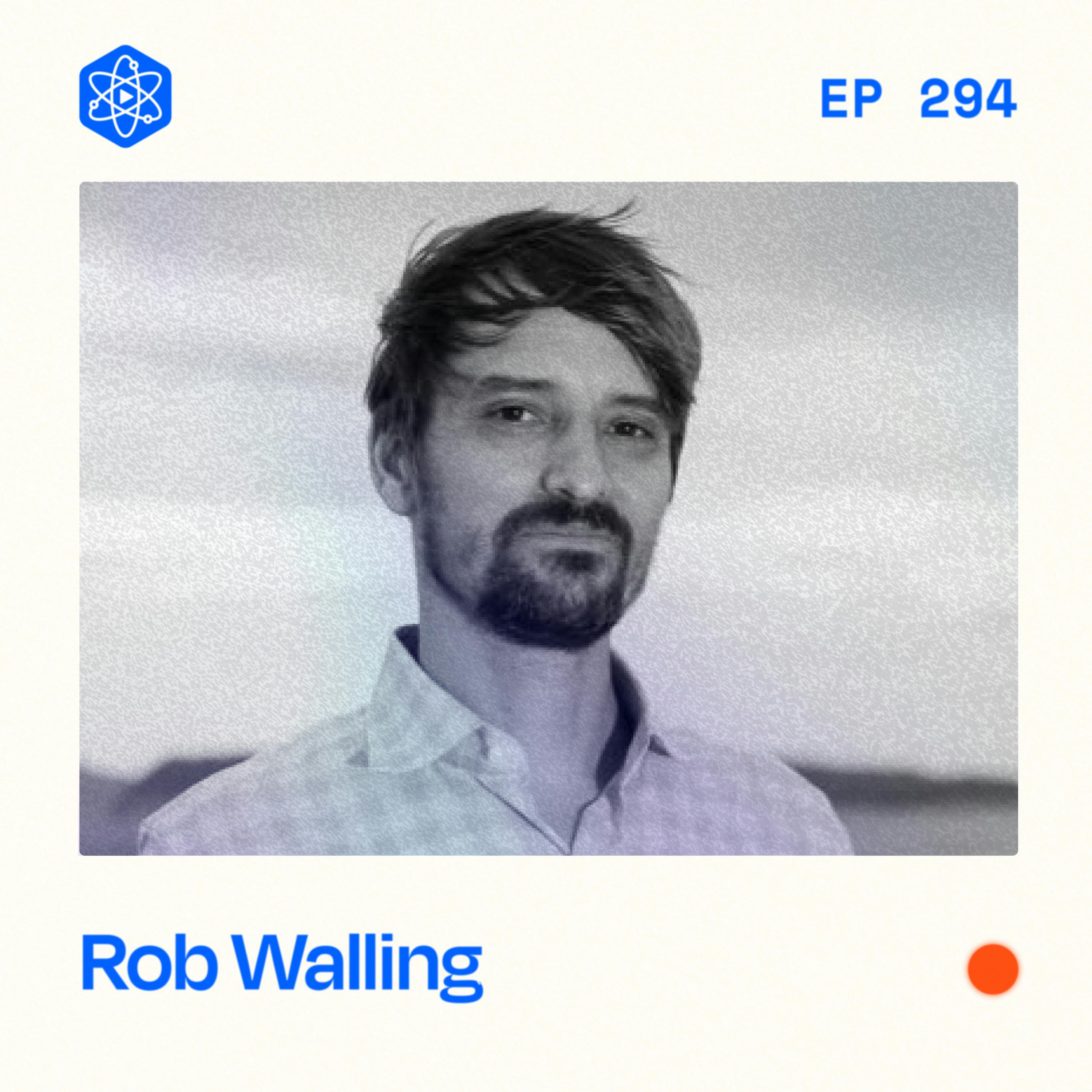
Rob Walling is the founder of MicroConf, TinySeed, and formerly Drip.






Rob Walling is a godfather of the bootstrapped SaaS movement — he's started 6 companies (5 bootstrapped), built and sold Drip for 8 figures, and created the infrastructure behind MicroConf, TinySeed (which has raised nearly $60 million and invested in over 210 SaaS companies), and Startups for the Rest of Us (820+ episodes over 15 years). But here's what surprised me: Rob told me he's more of a creator these days than a software founder. The guy who built and sold an email marketing platform now gets his dopamine from podcasting, writing books, and making YouTube videos. And his experience on both sides gives him a perspective on the vibe coding trend that I think every creator needs to hear.
In this episode, we get into the actual mechanics of how Rob runs his business — the team of 11 people, the $100,000-$120,000 monthly payroll, the four brands he wishes were two. We talk about how he eliminated stress from his life through therapy, hiring owner-level thinkers, and handing the project management to someone else entirely. And we have a real conversation about why vibe coding a SaaS product is probably not the opportunity you think it is — even if you have a big audience. This is part 1 of a 2-part episode; part 2 lives on Rob's podcast, Startups for the Rest of Us.
→ Rob Walling's YouTube Channel
→ Startups for the Rest of Us (Podcast)
→ TinySeed
→ SavvyCal (co-founded by Derek Reimer)
Full transcript and show notes
***
TIMESTAMPS
(00:24) Introduction — why Rob Walling is a unicorn in the bootstrapped SaaS world
(02:40) Mapping the full Rob Walling business ecosystem: podcast, MicroConf, TinySeed, books, YouTube
(05:15) How Producer Ron keeps the trains running on time across four brands
(06:44) Inside the team of 11: roles, full-time commitment, and why Rob stopped hiring part-time
(07:53) The psychology of making your first full-time hire (and Rob's 8-year wait for MicroConf)
(09:33) Moving from task-level to project-level to owner-level thinkers
(10:27) Four brands, two LLCs — the insurance story behind the split and why Rob wants to consolidate
(12:18) Why Rob doesn't want his name on everything (and the legacy question)
(14:41) Identity shifts: from SaaS founder to serial entrepreneur to content creator
(16:31) The vibe coding reality check: why building SaaS is 10x harder than creating content
(19:09) Why SaaS churn makes recurring revenue harder than it looks for creators
(21:04) The construction analogy: tool sheds vs. skyscrapers and where vibe coding breaks down
(24:53) Data from 234 investments: only 10-15% of successful SaaS companies lack a technical founder
(27:00) The bigger opportunity for creators: equity partnerships instead of vibe coding
(29:00) 'Build your network, not your audience' — why audiences plateau for SaaS growth
(31:53) A week in Rob's life: deep work Mondays, advising Wednesdays, and the 329 TinySeed founders
(34:00) How Rob eliminated stress: therapy, delegation, and giving up project management
(38:46) Hiring for high-functioning: screening for 'Producer Ron'-level operators
(41:21) The positive tension of deadline stress and why containers make you ship
(43:09) Post-exit motivation: 6 months of comic books, guitar, and getting bored into purpose
***
RECOMMENDED NEXT EPISODE
→ #291: 48 Hours With Clawdbot: How I’m Using It and Initial Reactions
***
ASK CREATOR SCIENCE
***
WHEN YOU'RE READY
🚀 Get CreatorHQ (creator operating system)
🧪 Join The Lab (private membership community)
***
CONNECT
***
SPONSORS
Learn more about your ad choices. Visit megaphone.fm/adchoices
Rob Walling [00:00:00]:
Being a part-time SaaS entrepreneur, it isn't really a thing. Like, it just doesn't exist. Is, is if you're doing it part-time, you're like half-assing it and someone will swoop in and eat your lunch.
Jay Clouse [00:00:24]:
Hello, my friend. Welcome back to another episode of Creator Science. Today I'm speaking with Rob Walling. Rob is a godfather of the bootstrapped SaaS movement. He started 6 companies, 5 of which are bootstrapped. And if I had to guess, the one you might be most familiar with is Drip, an early email marketing platform. It was started around the same time that we had ConvertKit, now Kit, and ActiveCampaign. He built and sold that company over a 3-year period for over 8 figures to Leadpages.
Jay Clouse [00:00:55]:
And his co-founder on that, Derek Reimer, is is the creator of SavvyCal, which, you know, I'm a big fan of as well. After Drip, Rob created the infrastructure to help thousands of founders do the same. You may have heard of MicroConf, which is the original community for bootstrapped founders, TinySeed, an accelerator that's funded over 180 SaaS companies, and Startups for the Rest of Us, which is actually where it all started with Rob more than a decade ago. 800 episodes of that podcast and more than 15 million downloads. Rob is a unicorn, and as involved in the SaaS world as he is, you'll hear him tell me that he's actually more of a creator these days than a software founder. But his experience gives us a unique perspective into the current vibe coding climate and the opportunity or distraction it presents for creators. So in this episode, we get into the weeds of how Rob spends his time. I'm fascinated by this.
Jay Clouse [00:01:48]:
How he's built his team. We get into the roles on his team, his payroll. How he's managed to eliminate stress from his life, and why vibe coding may not be the opportunity that you think it is. This is part 1 of a 2-part episode that Rob and I put together, and part 2 is on his podcast, Startups for the Rest of Us. So if you enjoy this, there's a link in the show notes for you to check out Startups for the Rest of Us and listen to part 2. We'll get to that episode with Rob right after this. I think as a starting point, I would love for you to kind of lay out how you see the entire Rob Walling business ecosystem because you have such a sprawling set of— from the outside— properties and areas that you operate. And so I wanna make sure I have a full sense of it and also let the listener understand here's everything Rob is doing right now.
Jay Clouse [00:02:40]:
Rob Walling [00:02:40]:
It's been a little by accident, but a little intentional, especially once The further along I've gotten, the further along I've seen the needs of software entrepreneurs, right? Of SaaS founders and been like, oh, they need this next thing, you know? And that's, that's why it's, it, I wouldn't say it's sprawling, but sometimes it feels that way. So I am a podcaster, right? Startups for the Rest of Us, 820 episodes over 15 years, every, every week since 2010. I really, really enjoy it. And I was doing it for free. For 10, 12 years, you know, and then we started taking sponsorships and stuff. And then I run MicroConf and TinySeed. And so MicroConf is, uh, an event twice a year in the US and Europe. And it is education.
Rob Walling [00:03:23]:
We do mastermind matching. We have a video course on vetting ideas and, and starting a SaaS and how to do early stage growth. And we have an online community called MicroConf Connect, much like you, you know, with a paid monthly subscription. It's hosted in Circle. And so MicroConf is like, a community both in person and online. And then Tiny Seeds is a venture fund. We've raised just under $60 million to invest in B2B SaaS founders. It's also an accelerator.
Rob Walling [00:03:48]:
So like if people have heard of Y Combinator, 500 Startups, Techstars, we do that, but we focus specifically on B2B SaaS. And then, then I was, I was a blogger for many years and I started writing books kind of begrudgingly. Now I've written, I've published 5 books and I'm working on my 6th. I'm, I have almost a draft of the 6th book. And I, I really enjoy that piece too. And I've started software companies. Like I wouldn't be talking about this. I wouldn't be telling people how to do SaaS if I hadn't started my own, right? But I, I gotta admit, man, I re— of all the stuff I do, I really enjoy creating content, creating stuff, whether it's written, audio, or video.
Rob Walling [00:04:26]:
I have a YouTube channel too, right? But that all just plays in. I love putting that in the world and seeing what people think about it. Like, that is my dopamine these days.
Jay Clouse [00:04:35]:
And so from the outside, you could look at this and say, okay, Starbs for the Rest of Us, that's an audio podcast that is now also on YouTube. MicroConf was an event, but now you have the community and really, like, that's kind of its own media company because I'm getting emails from MicroConf all the time. TinySeed as well. So, like, there are so many media properties within what you do that you are constantly publishing to. And I'm just curious to hear how you think of those things, how much overlap there is, how much you think about the schedule of publishing. How do you consistently put things out from each of these named brands every week?
Rob Walling [00:05:15]:
The short answer is two words: Producer Ron. Produce— my producer Ron just, it keeps the trains running on time. He does so much stuff and keeps me— we have a whole, uh, system built in Airtable that's just like, Rob, record this by this date so that the editors can have it out by this date. And so there's a YouTube— we used to do a YouTube video every week and it's completely custom, 10 to 15 minutes of thought leadership. It's not interviews, it's Ron coming up with concepts and then me weighing in on them weekly. It was great and it grew the channel really quickly. We got to almost 100,000 subscribers in a couple years and then it plateaued mostly because bootstrapped B2B SaaS is only so big. Like, we're at like 111,000.
Rob Walling [00:05:52]:
It's about as big as channels get in this space. Right around $120,000, $125,000. And then the podcast, I've— that one I've just done every week for 16 years and I can't imagine not doing it. So that just happens. Everything else, I mean, between MicroConf and TinySeed, each of those businesses, there's two of them, right? Each one is doing low single-digit millions in revenue. And it— we have a team of 11 people. And so that is the longer answer of it's not just me. I mean, I'm the one that's creating a lot of the content, but Man, I record a pod, you know, I hit record, you and I'll chat, and then I don't see it again until I— no, I like review, I actually review it.
Rob Walling [00:06:31]:
I don't have to though. It will just go live in 2 weeks with show notes, with a full transcript, with the advertiser, you know, the, the sponsorships in there. I don't sell sponsorships. Like everything aside from the content is handled for me, which makes it a lot easier.
Jay Clouse [00:06:44]:
And when you say team of 11 people, is that full-time and part-time? Give me some more. Detail into those roles and how full-time they are.
Rob Walling [00:06:53]:
Yeah, everyone is full-time except for our advisor in residence with the accelerator. I think he's 10 hours a week, and then producer Ron is slightly less than full-time, but everyone else is full-time.
Jay Clouse [00:07:10]:
So I'm just doing some back of the napkin math. If you have 10 people full-time and we assumed an average of like $100,000 salary, we've got payroll of nearly $10,000 to $12,000 a month, probably?
Rob Walling [00:07:29]:
Uh, $100,000 to $120,000 a month.
Jay Clouse [00:07:31]:
Factor of 10 off. $100,000 to $120,000 off.
Rob Walling [00:07:34]:
Yeah. You're doing live math on the internet. You can't, you can't do that. Yeah. Yeah. So that would be exactly if you think monthly and I don't know if that's our payroll or not. I think, um, Several of us make more than $100,000. Sure.
Rob Walling [00:07:44]:
And then there's payroll taxes and then there's health insurance, which in the US is an unmitigated disaster in terms of how expensive it is. So yeah, no, our personnel cost is significant.
Jay Clouse [00:07:53]:
So when you think about hiring, this is not a path I thought I was gonna go down, but here we are. When you think about hiring, this is something that has always slowed me down because it feels so scary to make a commitment to somebody of a full-time salary and benefits for an unforeseen period of time. But they're probably hoping that it, continues as long as they would like it to continue. How do you know that you're ready to make another full-time hire?
Rob Walling [00:08:18]:
I've faced this both with SaaS companies that I've created, with MicroConf as an education events company, and then TinySeed, which is a, a venture fund, right? I've faced the exact question like, well, do we need to hire? Do we have the room to hire? When do I feel comfortable? I've felt comfortable when I have extremely stable and reliable revenue that I know can cover it. So with a SaaS company, it's subscription. And you usually, if you're winning, if things are going well, it's up into the right. And so it's either flat or going up every month, right? With MicroConf, before we, I mean, geez, we ran that event for, we started in 2011, first full-time hire was 2019, 8 years. And it was because that was when I was convinced like, oh, we are stable. We have a brand and we sell out all our events. And I, you know, and then COVID hit, that's a whole other thing, but you couldn't see that coming. That was the first full-time hire.
Rob Walling [00:09:04]:
And then with, tiny seed when we raise a fund. Fortunately, revenue is, uh, it's very stable, right? Because if you raise $10 million, you then take a few percent of that per year as your management fee. That's the long answer. The short answer is there's a stability to it that I need to feel. Now, it's personal preference. There are some people I know who the moment, oh, we made 10 grand a month, let's hire somebody, and they're cool with that. And their risk tolerance is different than mine, you know. Their, their willingness to go out on a limb is— I'd never taken out credit card debt to start a business.
Rob Walling [00:09:33]:
I've never done the second mortgage on my house. I know some people who, right? So each of us is making our own decisions, but, um, given your— the, the stability, especially of your subscription revenue of your community. And cuz I, you know, I, I've listened to your show, so I, I have an idea. You talk, you're pretty open with your revenue. There's something about— I used to be Mr. Part-time or Mr., like, I'm gonna have 5 different people part-time because I don't want to commit to anyone. And man, when I leveled up and started like paying a lot of money for folks who were full-time, we now— everyone considers himself on a team and we work well together. The amount of work work we just got done was so much more.
Rob Walling [00:10:07]:
I went from hiring task-level thinkers to project-level thinkers to almost owner-level thinkers at this point, you know.
Jay Clouse [00:10:13]:
Yeah, that's a good way of thinking about it. So your structure, I'm guessing MicroConf, TinySeed, separate business entities. Is there a third or even a fourth within the mix of these people that are on your extended team?
Rob Walling [00:10:27]:
No, I mean, I have my own like umbrella corp that's my— or it's an LLC that's mine, and, and Stuff Funnels in there, but no one works for— I'm the only employee of that. Yeah, TinySeed, MicroConf, two LLCs, they pay the whole team. And you know, here's the thing you asked, like there's a sprawling empire and you have these different things, cuz there's four brands. There are four brands at play. Startups for the Rest of Us is a brand, TinySeed, MicroConf, and Rob Walling. I wish we had one or two. If things had gone differently in different order, TinySeed and MicroConf would be one company with one name.
Jay Clouse [00:11:00]:
Mm-hmm.
Rob Walling [00:11:00]:
Now the reason there are two companies, honestly, they were one company at one point and there was an insurance thing we were trying to— We were trying to get insurance for the events and for a venture fund. Insurance was like, wait, what, what exactly are you? And so they're like, it'll be easier if you literally fork out an LLC and put the events under there. And that's why it's split. But realistically, I wish we had one brand name under those two. Yeah. It's just the way things happen. It's legacy, it's debt, and it's business debt, not technical debt. You know?
Jay Clouse [00:11:28]:
Do you think about combining these things ever?
Rob Walling [00:11:30]:
Absolutely. Every fucking month, every month, every time someone says, where's the TinySeed YouTube channel? Which doesn't exist 'cause we put it on either Rob Walling or on MicroConf. And then, w— w— have— Startups for the Rest of Us should probably just be renamed to something like with Rob Walling in it maybe? You know what I mean? We just rename the MicroConf channel to Rob Walling. Like the YouTube channel now is youtube.com/@robwalling. It's so much friction. Yes, I think about combining and we've talked about it and maybe we will someday.
Jay Clouse [00:12:00]:
Do you think there would be an impact or an implication on the team's buy-in and owner-level thinking if the team was all aligned under the brand Rob Walling? Meaning if the team was literally behind your name and identity, do you think that would impact how they feel working?
Rob Walling [00:12:18]:
Maybe. I'm gonna answer a question you didn't ask, which is, would I like to be the Rob Walling Accelerator and the Rob Walling event and this and that? Not really. I kind of like having a brand that is separate from me. I've always had a company name, like Drip was separate from me, which I guess it's a SaaS app, it should be. But like, I don't wanna build, don't— I don't know. I know, I know a lot of people do this and they brand stuff under their own name, but other than my books and maybe YouTube and the podcast, I would feel comfortable with all of, I, like, if, if podcast was called the Rob Walling Show or something, I'd be fine with that now. And the YouTube is, and my books are, but like, other than that, I, these things are separate entities and I want them to live separate for me. We're coming up on like 2 and a half more years.
Rob Walling [00:12:58]:
Tiny Seeds has been around 10 years already. Am I gonna do that for 20 or 30 years? Like, at some point I'm gonna stop. And I actually want it to have the ability to live on. I don't want it to be tied to my name. You know, I've watched Ramit, right? Like, Ramit's done that. I think Pat Flynn always had Smart Passive Income. I don't know. There are other folks who've tied it to their name.
Rob Walling [00:13:16]:
Tim Ferriss has done a bit of that. And I don't know. It's not a thing that I, I think I want to do. If TinySeed and MicroConf were combined under a single name, whether it's TinySeed or whether it's just a brand new thing we came up with, XYZ company. I do think that would be beneficial to everyone. And so that's one another reason why I think about it is it's, it'll be short-term pain because we'll say, but I loved MicroConf and I love TinySeed, you know, but I do think it would be better. It's not ideal.
Jay Clouse [00:13:43]:
Where'd the name TinySeed come from? I was reading a children's book to my infant daughter last month and it had this phrase tiny seed in it. I'm like, I wonder if you read this book.
Rob Walling [00:13:53]:
I did not. We, um, Einar and I, my co-founder, were agonizing over the name and it's naming so hard. I'm just not good at it, you know? And we were going back and forth, had all these lists, and we're talking— this before you could talk to ChatGPT, right? So we were coming up with different ideas and mathematical concepts, and we're both nerds, and he has a PhD in data science, and he's like, name it this thing, 'cause Y Combinator's named after like a mathematical thing. And Y Combinator is amazing, world-class accelerator, and it's the worst name ever. Like, it's a fucking terrible name. I, I don't like it at all. So we were batting things around, and I'm like, dude, We're gonna be like a seed fund and like there's microconf 'cause it's about small businesses and like we're gonna have tiny seed rounds in essence. I don't know, let's call it Tiny Seed.
Rob Walling [00:14:34]:
And that was what we did. I like it.
Jay Clouse [00:14:35]:
It works.
Rob Walling [00:14:36]:
It works. It's got personality. It's not the best, but it's, it, it's fine.
Jay Clouse [00:14:41]:
So amongst all the things you do and the, the lives you've lived, SaaS founder, event organizer, author, content creator, do you have an identity that you like really feel strongly amongst any of those words I just said now? Or has it shifted? I can kind of see like almost on monkey bars, like going in between these different stages. I'm curious how that experience has been.
Rob Walling [00:15:03]:
Definitely has shifted. I would describe myself when I introduce myself now as like an entrepreneur or a serial entrepreneur. And I've started 6 companies, 5 were bootstrapped and then TinySeed we raised money for. I really enjoy writing books and podcasting and YouTube. A lot of people can do that. And if I were to say I'm an author, it's like, oh, that's like one thing I do, but that's not really what I do all day. You know, I write a book, I ship it. Do a Kickstarter, you know, and, and that's cool and it's fun.
Rob Walling [00:15:27]:
And could I be solely an author or content creator at some point? Yeah. But I tell you what, man, running a SaaS company versus being a content creator is like night and day. It's so different. And so there's something about me that identifies with that grind and the being an operator. Much as I like talking about it more than actually doing it, I do think of myself as an entrepreneur. I've gone on podcasts and they'll call me a venture capitalist and I'm like, ooh, I don't like that at all. Like I, I get it that I invent and we have a fund and technically you could describe me as that, but That's just one piece that I do.
Jay Clouse [00:15:58]:
We're in an interesting time today where I see more and more creators or formerly aspiring creators seeing that building software seems more achievable and easier than ever, even if you have no background in engineering. And I'm sure this is seeping into your world quite a bit as well. So where do you see the delineation today between like a content creator who's vibe coding versus a SaaS founder, and where do you think it's going?
Rob Walling [00:16:31]:
So there's a couple things that are really hard about SaaS, like really hard, that people don't think about. One of them is that building a product, like a software product that people actually want to use and will continue to pay for month after month after month— it's called product market fit, but It just means building something people want and are willing to pay for. It's way, way harder than people think. And creating content, writing books, podcasts, YouTube that people want to consume is— I'm just going to say comparatively, because I've done both of these things, is way easier. And it's not like, oh, it's like 80% as hard. No, it's like 10 times harder to build a software product versus write books. And I, look, I've self-published all my books. I've sold 100,000 copies across all of them.
Rob Walling [00:17:15]:
So I've, I have some success here. You know, I've made— and not quite a million dollars, but it's something like $850,000 in top-line revenue on my books. I've done all right. And I haven't even focused on that. That's a part-time thing that I do as a hobby. You know what I mean?
Jay Clouse [00:17:28]:
Mm-hmm.
Rob Walling [00:17:28]:
And building a SaaS product is insane. It's insanely hard. And then just maintaining it and keeping it and competition and then operating it as a company and hiring people. Like every TinySeed founder, we've invested in 210 SaaS companies. Everyone without fail who gets into the millions in revenue is burning out hard. And there is a reason that so many of us sell in— once we hit single-digit millions, A, because SaaS is really valuable at that point, but B is 'cause you just don't wanna do it. You don't wanna torch your life like that. And I have created content now since 2005 is when I started blogging.
Rob Walling [00:18:06]:
So I'm like 20 years into it. I've never burned out on it the way that I did running a SaaS company for 3 years. 3 and a half years from when we broke ground on code and with Drip, that was my last SaaS until we sold it, 3 and a half years. And I've never been so burned out in my life.
Jay Clouse [00:18:21]:
I didn't realize it was such a short period of time too.
Rob Walling [00:18:24]:
I thought it was— 2 and a half from the launch.
Jay Clouse [00:18:26]:
Wow.
Rob Walling [00:18:26]:
Yeah, it was crazy. It was a very fast growing thing and it was doing millions and I was like, I hate my life. This is everything I've always dreamed of and this is way harder than I thought it would be. And there were 10 of us, you know, a team of 10 bootstrapped. There's a big difference. It is, it is much harder. And a lot of folks I see who do the info— we used to call 'em info marketers, right? The info products. Now it's more like creators and marketers and such.
Rob Walling [00:18:46]:
They do want to get into SaaS because it's subscription revenue and, you know, there's all these— it's so appealing, right? And it's so valuable if you want to sell it. But it is way, way, way harder. It's just different. And I'm not saying that to be like, oh, look at me, I did hard things. I— there's a reason my day job now is kind of creating content. It's not running SaaS companies anymore. That's because running SaaS companies is just not that fun, you know? Yeah.
Jay Clouse [00:19:09]:
I mean, there is a cost to consuming content, right? It's your time and attention, but also So many of us spend literal hours a day opening an app that was engineered to get us to open it, like Instagram, basically saying, I want to spend some of this time and attention right now and just scrolling. And if you're creating content and you're in that flow, congratulations, you are benefiting from the habit that these giant companies have implanted in all of us. There's no equivalent to somebody saying, I want to spend actual money right now on a monthly recurring subscription. Let me open an app and just start spending money on that. There's so much more friction when it's literal dollars and there's not a distribution system that's pulling people in to spend it.
Rob Walling [00:19:54]:
That's right. And it is, you know, I can sell a course or a book and someone may never read it. I don't want that to happen, but you and I both know the majority of people who buy a course for $500 or $1,000, don't actually use it, but they don't then come for a refund. If you build a SaaS and people stop using it after 2 months or 3 months, they cancel. And so you spend all this time marketing and getting them in, you know what I mean? And churn is just— it's brutal. You really have to solve a problem very well in a way that hasn't been solved before or position it in a way that hasn't been positioned before in order to get traction. And it's a ton, a ton of work. It's like multiple businesses, right? Being a content creator is basically like, I'm gonna market my SaaS.
Rob Walling [00:20:39]:
Great, you're good at marketing. But now there's a whole nother business. It's all building the software, maintaining it, and technical debt, and hiring engineers and managing. And then there's the operations of the company, 'cause you're gonna need employees to do it. So it's kind of like 3 businesses, and being a creator is one. And I say that with a ton of respect. Like, I, making a full-time living as a creator is awesome, but it is, um, It is a very different, different experience.
Jay Clouse [00:21:04]:
And I have to think a lot of this excitement around vibe coding is because it's more accessible, which net benefit, that sounds great. And I love feeling like I have agency to do the things that I want to do, and I feel that more than ever. But I feel like if you do vibe code a public-facing tool that other people can sign up for and use and pay for, either you're going to have to quickly staff up and build this infrastructure, and you're forever going to have to improve it. Otherwise, if it was a successful tool that you vibe-coded over a weekend, or even a week, a month, whatever, somebody else can do the exact same thing so quickly. And it's probably a differentiator of quality of the product, yes, but also distribution, getting awareness to the product. I worry for content creators who are jumping into this because they feel like it's kind of a a gold rush, and they're not thinking a step or two ahead of what treadmill they're stepping onto.
Rob Walling [00:22:02]:
Mm, I like the way you're putting that. Yeah, because you write a book and you're done. You record a YouTube video and the vid— you ship the video. You record a course. I spent like 6 months building my course last year, and we shipped it, and it's done. SaaS is never done. Never, never, never. There's, there's like a handful.
Rob Walling [00:22:21]:
If you're like a single feature in a small utility that does a thing and you rank in Google and and you're just getting tra— you know, there, there are some kind of autopilot-ish things. Other than that, man, it's like no constant development. And it's not just bug fixes. It's like you need the features, you need to keep pushing though. There's competition, they're sideswiping me, this one outta date, whatever. So I agree. I use an analogy of if I were to invite you over to my house here in Minneapolis, and let's just say you and I don't have any construction experience or any carpentry experience, you and I could build like a little tool shed. We'd just figure it out, right? And it would work.
Rob Walling [00:22:56]:
We could also then go build, probably build an outhouse, right? Just a small little structure. The moment I was like, "Jay, come help me build a garage, just you and me." We'd watch some YouTube videos, we'd build it. It'd probably be okay, you know? And, but it's like, "All right, dude, help me build a single-family house and a two-story house and a, you know, commercial whatever and a skyscraper," right? It's the same thing with vibe coding and coding, coding, like being a senior developer is, You can build a little utility or a little WordPress plugin or a Chrome plugin, like these things that are what, 50 lines of code, a couple hundred, whatever. Yeah, totally. You can do that. And it's not going to be a big deal long-term in maintenance and blah, blah, blah. But the bigger you get, the more complicated you get. If you vibe code that stuff, A, the security is a nightmare, technical debt, having to add features to it later.
Rob Walling [00:23:40]:
What people also don't realize is that AI is good as long as it can fit the entire codebase in its context window. The moment it can't, you're screwed. It starts doing things that conflict with other pieces of it. And if you bring in a human developer later and be like, well, they'll just clean it up. It is like having a 5-story building and saying, ooh, the foundation is totally hosed. Can't we just clean that up? It's like, no, it's the foundation. You can't just— what are you gonna do, jack the building? Like, that's what code is, is starts getting into cement. It's very, very hard to change.
Rob Walling [00:24:11]:
So that's the analogy I use. It's not perfect, but it is, um, tries to communicate that, hey, simpler things and especially internal tools, man, we build a lot of internal tools in MicroConf TinyC. We do a lot of it with no code, to be honest, but we do some AI stuff too because we know that the number of users is gonna be 2 or 3. And if there's a bug, it's fine. But to your point, if it's public facing and you're marketing it and selling it and trying to compete, it's not good, man. I'm totally invested in 234 SaaS companies between my own personal and and TinySeed. And I think it's like 10% of them do not have at least one technical founder, like one developer. Maybe it's 15 tops, even with live coding and everything and no-code.
Rob Walling [00:24:53]:
But those companies inevitably, those are the founders that are just— even when they have success, one of them hit, just hit, did they hit a million? I think they hit a million in ARR and they're still just struggling constantly with technical issues, with tech debt, with bugs, with slow feature velocity. It's their biggest headwind that 10%, 15% of companies. So I'm not saying that people, non-technical people shouldn't do it, but if I were to do it these days, like I don't write code anymore. I used to be a developer. I would find a technical co-founder myself if I was gonna do a SaaS company or hire your co-founders if you have the money, right? In the sense of not giving them 50%, but if I have the money to pay 150K or something for developer, I would probably do that if I
Jay Clouse [00:25:31]:
was gonna do it. I don't wanna talk people out of something they're excited about doing, but— Yeah. It just seems to me that ultimately, if you're trying to build a tool that is software that has recurring revenue, that has true long-term value for customers, and maybe even enterprise value if you want to sell it someday, it seems like there's just no way around saying, "I'm going to start a software company," and still going mostly the same route that has needed to be done traditionally with people and headcount and technical expertise on the team. Am I capturing that right in your mind?
Rob Walling [00:26:09]:
Yeah, the exception is if you're going to build something either small, like I said, a WordPress plugin or like a Chrome plugin, or build something in a small— an ecosystem like a Shopify add-on. I could probably vibe code that. It just depends on how big you want it to be. But for the most part, when people think of like, no, I want to build a whole system, you know, my audience is event planners and I'm gonna build like an event platform, like an actual SaaS, a standalone SaaS as I like to call it. Yeah, I cannot imagine not having a developer. And I learned to code when I was 8 years old and my first job outta college was actually an electrician. And then I was a full-time developer for like 10 years as I became an entrepreneur. I wouldn't start any type of SaaS company these days without a developer co-founder or at least, you know, an employee number one who was like committed full-time to me.
Jay Clouse [00:26:59]:
Now that just about anybody can vibe code an app with AI, it feels like a big opportunity for creators like you and I. Well, maybe not. After a quick break, Rob and I talk about this and where your audience will help you, where it won't help you, and maybe a different alternative that you should consider. This is a change in my perspective, so stick around. We'll be right back. And now back to my conversation with Rob Walling. I feel like the bigger opportunity for creators, especially when you have an audience, is to leverage that strength and become like a minority partner with somebody who wants to build a SaaS that is targeting the same type of person who is your audience. And then you kind of let the actual software part in the hands of that person, that team, and you continue building distribution, the audience trust, so that you can then say, by the way, I'm a part of this and it serves people like you and you should use it.
Jay Clouse [00:28:05]:
I think that's a huge opportunity for content creators that I just don't see many people really taking advantage of. You know, I— we saw like Marques Brownlee took a role as kind of like a chief of design, I think it was called, for Ridge Wallets as a physical product. We see a lot of people in the entertainment space starting consumer brands because they're trying to make something broadly appealing. But I feel like for content creators, especially folks in our audience who are providing a specific outcome or transformation, there's got to be software teams and tools that you can partner with on an equity ownership basis, not just an affiliate basis, if the fit is good enough. And that to me feels like the bigger opportunity for most folks rather than vibe coding something yourself and now being like a part-time codebase manager and not really knowing what you're doing.
Rob Walling [00:29:00]:
Being a part-time SaaS entrepreneur, it isn't really a thing. Like, it just doesn't exist. Is, is if you're doing it part-time, you're like half-assing it and someone will swoop in. And eat your lunch. It requires such focus to not have people churning. And the, the other interesting thing, I have this phrase I say is, if you're gonna build SaaS, build your network, not your audience. And I'm not saying that audience isn't worth a lot, but the amount of effort it takes to build an audience and then the quick plateau you will see when you launch your SaaS, because you, you basically, no matter how big your audience is, they're all gonna hear about your product within weeks or months 'cause you're gonna talk about it. They're gonna come in, some are gonna use it, some aren't, and then that's it.
Rob Walling [00:29:45]:
And I saw this happen with Drip, my last startup where we plateaued at like 8 or 9 grand. That was the audience I had, 8 or 9K MRR. Nathan Barry had this with, with Kit, it's not Kit, but ConvertKit, and he plateaued at like 1,500, 2 grand for like 18 months. And it wasn't until he went to his network which was Pat Flynn, 'cause he knew a bunch of the creators, right? Then they promoted to affiliate and blah, blah, blah. And that's, that's when they started growing. Similar with me, it wasn't until I went to my network and also I started running ads and, and we found product-market fit, blah, blah, blah. So your audience gets you a, a nice little start. It is, but it's a little start.
Rob Walling [00:30:21]:
I've never seen anyone have an audience get them to like 50K MRR, not even close. Even like Laura Roder, who, um, is an awesome SaaS entrepreneur, had an audience in the social media space when she launched Edgar, and she, you know, hit a plateau and then eventually got past it. But it's, it's a leg up, but it's not a guarantee of success at all. And to your point, you know, I don't know if they need to be— if you need to be a minority partner or whatever, but having equity in something I think is worthwhile. But to think that you're gonna create amazing content like you've been doing and also, oh, on the side, I'm gonna do a SaaS company. It's like, no, you don't understand how, how all-encompassing it is to do it well.
Jay Clouse [00:31:00]:
Totally. I think it's increasingly difficult to do excellent content on multiple channels as an individual. Like, it's becoming required to team build just to show up in different mediums. Because if you don't, there are people who will specialize in that medium and enough of them that they will outcompete you. So it's, it's a competitive world and it's been a competitive world in software. It's becoming an increasingly competitive world in content. Being able to generate content is equally problematic in the, the creator world as it is in software, I'm sure. Yeah.
Jay Clouse [00:31:35]:
I wanted to ask this a minute ago. You said, um, you're effectively more of a content creator than a developer these days. What do your days look like? Do your days through the week feel similar or do you have different days for different things? And if they're similar, let's just hear about that. If they're different, let's hear about a week in the life of Rob Walling.
Rob Walling [00:31:53]:
Yeah, so Mondays and Fridays I don't do any calls. I try not to unless absolutely necessary, and I often use them for my deep work. You know, if I'm gonna write, if I'm going to get deep into a YouTube video. Like, normally we do 10 to 15 minute videos, but we recorded like a 30— it's edited tight and it's 36 minutes. Went live on the channel a couple weeks ago, and that took a ton of work, mostly for my producer, but I had to get into it too, right? So I like to have time and space for that. And then Tuesdays and Thursdays, I wind up having calls with the team. So I don't operate the companies anymore, and that's my choice, right? I've been running companies for 20 years, and I mean in the nitty-gritty of the day-to-day, keeping people on task, project managing, like reviewing emails and reviewing all this. And that's just— I'm kind of done with that.
Rob Walling [00:32:44]:
It's just not fun for me anymore, you know? And I have the luxury of having these companies and having a team that can do that. But what I do is I kind of consider myself the face, the figurehead, as my co-founder likes to call me. You're the figurehead. And I really enjoy the content part, but then I am an experienced entrepreneur. I am an experienced manager and like motivator of people. And so I consider myself almost an advisor to Tracy, who is running, kind of running the companies, is the operator inside. And so we meet once or twice a week and talk about what's going on, what's working, what's not, what are our new things. Should we rebrand? As you brought up.
Rob Walling [00:33:20]:
Um, and then I meet with producer Ron, uh, once a week and we just talk through the content.
Jay Clouse [00:33:25]:
What are Wednesdays?
Rob Walling [00:33:26]:
Wednesdays is a lot of— uh, you're listening, you're paying attention. Wednesdays is, um, and Wednesdays and Thursdays actually advising founders. Okay. You know, we have 329 founders in TinySeed and they book office hours. So I have office hour time set up then and anything else. You know, that needs to get done. There's always just random stuff where I'm giving advice to someone I knew 10 years ago and they're asking me for a favor, or I'm— whatever. Interviews, I mean, the interview, you know, getting interviewed on a podcast like this.
Rob Walling [00:33:54]:
I just kind of— I think it literally is a Wednesday today when we're recording, so that's— it fits.
Jay Clouse [00:33:59]:
Do you feel stress?
Rob Walling [00:34:00]:
Not anymore.
Jay Clouse [00:34:02]:
I used to. Okay, say more about this because this is something I think about a lot. I feel like at any given time I am either choosing between time stress or financial stress in this season of life. Oh yeah. And lately I've been choosing time stress. And then I, I also think sometimes about like the horizons upon which I feel this stress. So given that I am publishing, we'll say mostly on a weekly basis on a couple of platforms, I feel deadline stress at least weekly, but typically like multiple days throughout the week. So I'm very interested to hear how you have removed this from your life.
Rob Walling [00:34:43]:
When you say you— because I know, boy, deadline stress is something weird. When we were shipping a weekly YouTube video and the weekly podcast and I was traveling like one week a month, sometimes two, it— I felt that and I was like, I'm always behind. But when you say you feel deadline stress, what does it mean? It's like a psychic load that you're kind of Yeah, it's— it's kind of
Jay Clouse [00:35:04]:
just like a refrigerator hum anxiety, like kind of an open loop where I just don't feel completely comfortable until that next piece of content is scheduled, done, ready to go. And then I'll feel momentarily okay up and through that deadline and then maybe a day or two beyond it.
Rob Walling [00:35:28]:
So there's a couple things that I have in place There's 3 things actually that I think about it. When I sold Drip, I was— it was 2016 and I was— and then I worked there another year and a half. I swore to myself that I would never feel as stressed and as burned out as I did then. Like I, I said, I don't know how I'm gonna do it, but I need to change my life. 'Cause I had some rough years doing that company for a number of reasons. So that was one thing is I committed, I'm gonna do it differently next time. And so when we started TinySeed in 2018, it, you know, the stakes are higher, man. The, like, we, again, we've raised almost $60 million.
Rob Walling [00:36:06]:
We've invested in all these founders and, and every month I'm getting some founder gets hacked or somebody gets a cease and desist or, you know, it's law of large numbers now. Just stuff's happening constantly. And yet these days I'm like kind of stoic about it. I did a bunch of therapy and I did, you know, I'm a, I'm an anxious person, like high anxiety normally. I used to be, I'm a lot less now. So that was like the first thing was, exploring in myself where this was coming from and actually dealing with it on a therapeutic level. So that's the first thing, but that alone won't fix it, at least didn't for me. The other two things are I have taken a lot off of my own plate.
Rob Walling [00:36:43]:
Like, I used to operate full-time a SaaS company, then run MicroConf on the side, and also do a podcast, and I was writing— but you know, it's just too much. It's too much. And I was who's doing it by choice, but it was a lot. And these days I don't because I've hired people to take things off my plate. Back to our first, very first topic. I've hired full-time team members that can take all this stuff off my plate so I don't have to operate the company anymore. The third thing, if I'm honest, is it sounds like you are still the project manager of all this stuff. Totally.
Rob Walling [00:37:21]:
Producer Ron is the project manager of all the stuff. And I know Ron reminds me once a week on our Tuesday call, "This is what's coming up this week. You have to get this video done by Friday." And I'm like, "Great." And he's like, "Oh, you should have shipped a podcast episode yesterday and you didn't." And I'm like, "Yeah, yeah, I'm on that this afternoon," right? I'm not project managing it. And he's so, he's so high functioning and he's never missed it. He's 4 years into this role and he missed once. One deadline, and like he did, and it was, uh, he was devastated. He was so upset. And you know what it was? It was a tweet.
Rob Walling [00:37:54]:
We do a clip of our podcast, 90-second clip of me saying stuff, right? And put it on Twitter and it didn't go live on Tuesday and it, it was Wednesday. And it actually wasn't really his fault. It was like an editor had dropped the ball, but he hadn't followed up. So it was kind of, it was his responsibility. It was his fault. He was like so upset. And I'm like, dude, you realize we're gonna tweet this tomorrow. No one cares.
Rob Walling [00:38:13]:
And he was like, I don't miss deadlines, Rob. I don't miss deadlines. So that gives you an idea of how good he is, you know? So all the anxiety you're talking about that you're like, oh, what, what's gonna happen in a— but here you go. Ron does all of that. So if I were you, I'm not gonna give you advice, but I would spend the money to hire a Ron. And then I'm the, I'm really am, people joke and say, oh, you're just the talent. You're the creator now, you know? I don't hate that. I don't want to— I don't think of myself as the talent, but I, I want to show— tell me the day before and I'll be there.
Rob Walling [00:38:46]:
Yeah, this is MicroConf too, like producer Sonya. I'm like, people ask me what's happening at MicroConf and I'm like, I don't know, ask Sonya. I don't even put any of that in my head. Sonya says, be here at this time for a tech check and then be on stage and emcee. And I'm like, great. This is exactly the level of worry that I want to have in this business. You know what I mean? Now you can say there's a luxury there because there's budget to do this and that, but I think that's really the big secret.
Jay Clouse [00:39:08]:
Yeah, definitely, uh, some stuff to unpack there. How did you screen for producer Ron to be so high functioning? How did you find somebody that high functioning? Because I've never met somebody who is more deadline oriented than I am, which inevitably creates a problem in the relationship because I need them to be more deadline oriented than I am.
Rob Walling [00:39:26]:
Yeah. So on our team of 11, we have at least 3 people that are that high functioning. That are that type A is really what we're looking at. I, I want people that are so fricking tightly wound that they— and we have at least 3, and I'm not gonna name names beyond Ron, but that was just part of the job description in the screening. And all you can do is say, what was it like last time you missed a deadline? When was the last time you missed a deadline? How did it make you feel? Right? And then you put 'em on a 2-month trial, a 3-month trial, you do a trial project, whatever it is, and you see how they operate. We could have been wrong with Ron. We got a little lucky, but I've hired, I don't know, between all my jobs and all my companies I've started, I've hired like literally 100 people in my life, like from a lot of developers actually to these roles and everything. I get lucky a lot.
Rob Walling [00:40:12]:
I get lucky a lot, which, which is what I mean, like I've gotten, I actually mean is I've gotten good at it. Like you can screen for these things, but you're not always right, right? So maybe if you were to hire, try to hire 10 producer Rons, You're going to be wrong a couple times in ways that you just cannot suss out in an interview. But that's it. We put it in the job description, but you gotta spin the plates. Don't let the balls drop and make that really clear upfront.
Jay Clouse [00:40:35]:
Yeah, I get in these seasons where— at the end of the year, we ran a live cohort program for 5 or 6 weeks. Very intense because I did not do a ton of prep beforehand. I was prepping like in near term before delivering the material. And that was by design because I know I tend to perform to whatever size container I give myself.
Rob Walling [00:40:56]:
Mm.
Jay Clouse [00:40:57]:
Yep. And so the antidote to deadline stress is to give myself larger containers, but then I don't ship as quickly. So it's like this positive tension I know about myself where I need to give myself some element of that stress and worry to perform to the degree that I want to. But it seems like a unique form of— I don't know, is that masochism?
Rob Walling [00:41:21]:
What, what is that? Mhm. Yeah, it is. And my whole content production system and all of this got so much easier once I had someone else telling me when to do it. I didn't have to rely on myself anymore. And I've been a self-starter and a bootstrapper my whole life and always had this internal motivation. Ship the podcast every week just 'cause, every Tuesday morning for 15 years, 16 years now. And I remember we were talking about hiring a producer before Ron, and I was really uncomfortable with it. I was like, I don't want someone else telling me what to do.
Rob Walling [00:41:55]:
That's a weird thing. I'm a founder. I tell myself what to do. It has taken so much stress off me. And he sets the deadlines. That's the interesting thing. He'll ask me like, hey, is this reasonable to get this done by here? And usually I'm like, oh yeah, it totally is. And then as I get close to it, I'm like, why did I agree to this? And then I, and then you know what I do exac— but then the container makes me do it.
Rob Walling [00:42:14]:
And there have been times on a Saturday, I don't mind working weekends, but I don't really do that anymore. It's been a while. On a Saturday I'm like, dude, I, I, I just forgot. And, and he'll ping me and I'm like, I'm gonna record this YouTube video this afternoon. I'm gonna spend an hour and I'm gonna do it right now. You know? So to me it's like not letting the team down is actually a motivation now. Everything I do It isn't just, oh, get a YouTube video live. It's like, but that YouTube video has an, a promotion for the new tiny seed batch that we're gonna take.
Rob Walling [00:42:43]:
If I don't get this live, it doesn't get to the editors in time, so it doesn't go live in time, so it doesn't promote that. So then I let that whole team down. That could sound stressful. It's actually motivational because it's all achievable. Like to me, the stress happens when it's an unrealistic thing and I'm like, oh, I'm, I'm working 12-hour days and I gotta do this thing. YouTube was stressful for me for a while. Because of that, but now I have the, you know, a little bit more time to be able to absorb it and do it.
Jay Clouse [00:43:09]:
This is a good segue to my last question. Given the success you had with Drip, 8-figure exit, it seems like you immediately moved into TinySeed, more time and content. What motivates you now, or what motivated you to keep moving at that point? It sounds like in the micro right now, delivering for your team, the kind of goals they have, the goals you put together as a team motivates you, but there had to have been a sort of point in the middle where you could have just been like, I'm good for a while. So what got you back into the game?
Rob Walling [00:43:42]:
Big time. I, I could have retired after Drip. Like I didn't need to work a day again. I never considered that because I do enjoy what I do, but I took 6 months off and did nothing. And that was actually quite restorative. I say I did nothing. I like collected some tabletop games and played a lot of solo games, and I collected some comic books. I played my guitar a lot, and I, you know, I listened to a bunch of music.
Rob Walling [00:44:06]:
It was so nice. I had nothing on the calendar. It was great. And then I got bored. I got really bored, and I was like— and you know what it is? It's not that I need to work, it's that I need me. I need to have an impact on people to be happy. I need to be learning. There's something about I said it earlier, but it's like pushing stuff into the world.
Rob Walling [00:44:28]:
And sometimes that software— that was software with Drip and with HitTail before that. Sometimes it's written, you know, it's, it's blog, it's essays, and it's, it's the books, and sometimes it's audio, and sometimes it's video. Pushing that into the world really brings me happiness and feeling like I'm adding value to the community, right? Or to the world, whatever, however you wanna phrase that. So I never considered that I wouldn't keep doing the podcast and everything else. But I did commit to my wife, I'm like, I'm not going to do another SaaS company. It's just, just not fun, you know, not fun for me and what I want to do.
Jay Clouse [00:45:09]:
So if you enjoyed this episode, check out part 2 over on the Startups for the Rest of Us feed. There's a link in the show notes for you to check that out. If you want to learn more about Rob, links to his social media, Microcon, TinySeed, and more are in the show notes. And don't forget to leave a rating or review, please. I want to double down on the podcast this year, and you can help by taking just a few moments to leave a review on Apple Podcasts or Spotify. In any case, thank you for listening, and I'll talk to you next week.