
 Apple Podcasts
 Spotify
 Overcast
 PocketCasts
 Castbox
 Castro
David Altizer has helped his clients earn more than 350,000,000 views






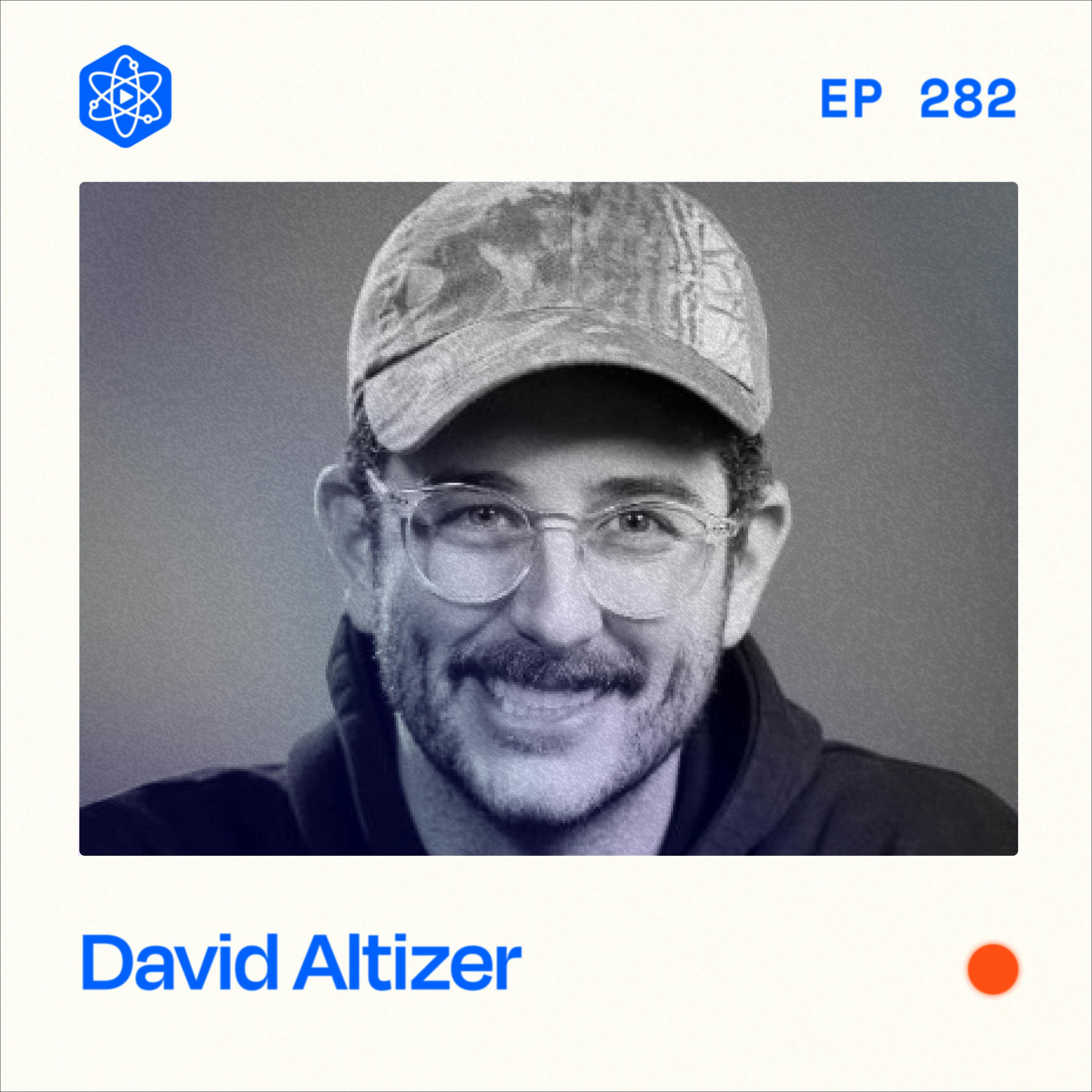
David Altizer is the co-creator of Thumbnail Academy and has quickly become one of the most sought-after thumbnail designers around. David’s clients include Kurtis Connor, Jolly, Max Fosh, Hayden Hillier Smith, and now me.
David’s thumbnails have earned nearly 350 million views—and in this video, he’ll show you why creating thumbnails is actually easier than you think.
Full transcript and show notes
David's Website / Instagram / Twitter / YouTube
***
TIMESTAMPS
(00:00) Intro to David Altizer
(05:20) Rule of Thirds Explained
(06:26) The Key to Composition
(11:07) Special Offer on 1of10
(15:02) Different Styles of Thumbnails
(19:39) Clickbait is Good, Actually
(22:05) The Key to More Clicks
(24:27) Thumbnail Text Strategy
(29:44) Learning from Far Side Comics
(32:57) Mastering Thumbnails and Outliers
(35:41) Working With Thumbnail Designers
(45:46) AI's Role in Thumbnail
***
RECOMMENDED NEXT EPISODE
→ #280: How to LEGALLY Protect Your Channel (YouTube Lawyer Tyler Chou Explains)
***
ASK CREATOR SCIENCE
→ Submit your question here
***
WHEN YOU'RE READY
📬 Creator Science Newsletter
🚀 Get CreatorHQ (creator operating system)
🧪 Join The Lab (private membership community)
🧞♂️ Get a Personalized Offer
***
CONNECT
🐦 Connect on Twitter
📸 Connect on Instagram
💼 Connect on LinkedIn
📹 Subscribe on YouTube
***
SPONSORS
David Altizer [00:00:00]:
The rule of thirds is one of the most popular ways to judge good composition for filmmaking. Once you learn this rule, you'll see it all the time. It's a mystery that nobody knew they needed to know. That's the best formula for a click. What if mini forks were made of salt? That worked because it's asking a question that nobody thought about before.
Jay Clouse [00:00:21]:
That's David Altizer, a thumbnail designer who over the last three years has taken YouTube by storm. David's clients include Curtis Connor, Jolly, Max Fosh, Hayden Hillier Smith, and now me. David's thumbnails have earned nearly 350 million views. And in this video, he'll show you why. Creating thumbnails is actually easier than you think.
David Altizer [00:00:41]:
The reality is, I think in the next five years, maybe even less, a lot of this work can be done with AI. This is only going to get better and better as time goes on. But you still need to be able to push and pull those levers to understand what gets the click. The psychology behind these contrasting ideas. Those are the elements that make it human.
Jay Clouse [00:01:01]:
Thank you to one of ten for sponsoring this video.
David Altizer [00:01:04]:
One of the most important things with good thumbnail design is understanding the balance of the image and the composition of the image. Those are great places to start, is to, like, look at some of the most popular and iconic movie posters. I think movie posters would be like an adjacent kind of category to thumbnail art is looking at great movie poster design and study that look at great cinematography and composition within cinematography. Because for cinema, every frame is framed in a widescreen format. You know, it's either a super wide, 2, 3, 5 kind of anamorphic shot or it is a 16 by 9. And so that's a great place to study because often for photography, they're framing for a vertical shot, like a portrait shot. But as a thumbnail artist, all of our Somalia are obviously 16 by 9. So looking at some of the most iconic, you know, frames from movies is great.
David Altizer [00:01:58]:
I think Wes Anderson does a really great job of making essentially thumbnail, thumbnail frames in his videos or hitting the video. I say videos. I'm so youtuber in his videos, in his movies. And then understand the lighting. If you're the creator yourself, you've got a great set right there, Jay. I'm looking at it. You've got a nice key light. You've got a fill light, but I can.
David Altizer [00:02:20]:
Or maybe you don't have a fill, but I do. Okay, great. But I can see there's a bit of shadow on your Left on your left, because your key light is probably, you know, the majority of the light, and then you got a little fill on the other side. Well, for thumbnails, you actually want a pretty flat lighting setup because you can add shadow in post production really, really easily. But it's super hard to kind of fix really harsh shadows or dark areas, lighting wise. Like, I see a lot of creators just maybe take a picture on their phone, probably while the video is being uploaded onto YouTube. They just switch over to selfie mode. They take a picture wherever they're seated, which is probably at their desk, and it's like really dark, and then they just like throw it in there, boost the exposure, and call it a day.
David Altizer [00:03:07]:
Or they just pull a screenshot from the video that is, again, just not lit. Well, you want clarity and simplicity. And so taking intentional thumbnail photos for your video is crucial, in my opinion. And that's one of the first things that I tell the creators I work with, who we start working together. I'm like, hey, I notice there's a lot of shadow. There's a lot of darkness in your face. Let's start boosting your face. Kind of have a flat lighting.
David Altizer [00:03:35]:
So essentially the light directly above the camera, maybe two other lights on the sides or sit next to a window, you just want to have clarity on the face because obviously humans react to humans and you just want to be able to see everything there. And it's a lot easier to fix, like add shadows than to take it away.
Jay Clouse [00:03:54]:
Yeah, we opened up a lot of paths there, and we'll go down them sort of one at a time. But I want to. I want to go back all the way to composition, because I think this, this word and this idea is second nature to you. And now I'm familiar with it. But even this term is probably new to a lot of folks. So talk to me about composition and what that means to you and how somebody who is playing around in Photoshop or Canva, how they should be thinking about composition.
David Altizer [00:04:23]:
Composition is basically the overall kind of balance of the image. And there's many different types of compositions that are kind of iconic for filmmaking. In particular, the rule of thirds is one of the most popular ways to judge good composition for filmmaking. You'll actually, once you learn this rule, you'll see it all the time in films. Basically, it's a tic tac toe grid that's applied onto the image and the points of interest, the most important points of the video or the movie motion picture, are lined up with where each Crossing point happens on the tic tac toe grid. You don't want to just put everything in the dead center of the frame though. That can be a style in of itself and requires a different type of composition. Again, going back to Wes Anderson, he's a famous filmmaker that has a lot of centered framing compositions.
David Altizer [00:05:20]:
And it's because he'll have his subject dead center, but then other elements in the background that balance it out. And that's really the crucial point is when you have something in the center and say somebody's looking off camera, it feels off balance when that person is looking off camera and you've got all this negative space over here, the eyes are going off to the, to the left of the frame and then on the right hand side of the frame, there's just all this empty weight. So by simply scooting the person over to that crossing point on that tic tac toe grid, essentially putting them off, off angle, off, you know, kind of off center, it adds this balance to the image that I don't even know like the science behind it, but it just feels right. And that applies that same rule totally applies to YouTube thumbnails. And you see it all the time. In fact, I'd say Ryan Trehan is like, his compositions are great. He tends to line his thumbnails up pretty much dead on with a rule of thirds rule. You can see that with a lot of the thumbnails that I do as well.
David Altizer [00:06:26]:
In fact, I actually use a rule of thirds tic tac toe grid as an overlay when I'm editing my thumbnails. It's that important and it's because it just feels more balanced when you're looking at a rule of thirds balanced image. Now the weight of certain objects in the frame need to essentially be balanced. Just like if you had. Have you ever seen like those old fashioned scales? Oh yeah, you know, so say you have a scale. My hands are the scale and I've got, you know, a heavy object on one side. Well, the weight of that object, if I don't have anything on the other side, is gonna pull down like so. So I need to balance it out with something else.
David Altizer [00:07:07]:
So I've got my coffee cup here and my remote here. The coffee cup's actually a little bit bigger. But now when I, if I'm talking about just composition now when I have the remote standing upright, the weight of this now sort of balances the weight of the coffee cup. It's about the same size, except it's skinnier. This is A little fatter. So those two objects, if you're watching the video, balance each other out really well. And so the same is true with thumbnails if you have a face off angle. Like, again, if you're watching the video, I've just scooted myself to this side.
David Altizer [00:07:40]:
Although when I'm looking at my own frame, I've got this plant behind me that's actually some weight that is making this even look wrong. So I would even go, maybe here. Or.
Jay Clouse [00:07:50]:
You see this in interview thumbnails all the time. If you have just one face, it's off to the side. I mean, we do it in our thumbnail. Sometimes if you have the guest and the interviewer, you have this opposed view that you were describing.
David Altizer [00:08:02]:
Yes. Basically, the balance of it all has a lot to do with, like, the video just. Or the thumbnail just feeling right. And you see it with the best YouTubers out there. And it's the same rule that's been around for a very long time in photography and filmmaking, and it totally applies here with thumbnails.
Jay Clouse [00:08:21]:
So when somebody's making a thumbnail and they're not thinking about the rule of thirds and they put that up and it's on the YouTube home screen, the recommended areas. Are people clicking on thumbnails because people are following rule of thirds composition, or are they ignoring thumbnails because they are not following those rules?
David Altizer [00:08:42]:
Oh, my goodness, that is a fun question. Because I think there's always outliers within that. There's probably a few thumbnails that you could send to me that are like, well, this doesn't follow the rule of thirds. And that certainly is possible, especially if it's something that is a real viral moment, like an athlete moment or, you know, a news story or something. But yeah, I don't know if people click on the thumbnail because the composition. It's hard for somebody who doesn't know these rules, who doesn't understand graphic design. They're not going to be able to point to why something feels right. But it's just about the.
David Altizer [00:09:27]:
I don't know, maybe just the human nature of it is like, you know, if it looks off, it feels a little amateur and it feels. It just feel. It doesn't feel intentional. It feels very thrown together and will convey maybe a sense of unprofessionalism. Does it matter? Like, YouTube is not a professional place necessarily. In fact, a lot of the best creators out there are almost intentionally making their stuff look handheld and shot on phones and feel more amateur. But even within that Again, Ryan Trahan is a great example. His stuff, I think, is shot on iPhones, and it's kind of shot to look very raw.
David Altizer [00:10:09]:
But his thumbnails have, like, perfect composition. So, you know, and I think Casey Neistat, too. You and I are the same age, so we remember when Casey blew up in 2016. Right. Like, the thing that I recognized with him was he had this illusion of these vlogs that he was doing every day being thrown together. But you can with the right, you know, with the cinema eye and understanding filmmaking and composition, you could see almost every shot was so perfectly balanced compositionally because it was second nature to him. And I've noticed, too, like, just because I've been a filmmaker for so long and my brain is just so compositionally wired, when somebody hands me their phone to take a picture, I just can't help it. But I'll just kind of start, like, looking for that rule of thirds.
David Altizer [00:10:57]:
And I just kind of frame the picture like that. And then you hand it to somebody that just normally just holds the camera and just takes a picture, and they're like, wow, why does this look so good? I'm like, composition.
Jay Clouse [00:11:07]:
If you're like me and thumbnail design and composition is still kind of scary, that's another reason to check out our sponsor, one of 10. Let me show you why. So when I land on the homepage, the first thing I see is a bunch of outlier video themes. And I can look at these for inspiration and start to understand composition. You can see the rule of thirds in play here and here, the center alignment here and here. You start to get a sense for, okay, why do these thumbnails work? But you don't even have to do all of that work. One thing I like to do is generate title and thumbnail ideas directly inside of one of ten. Let me show you how if I go up here to the title generator, I can tell it a little bit about the video I'm making right now.
Jay Clouse [00:11:46]:
Interviewing a thumbnail designer about best practices for easy thumbnail design. It will automatically give me titles inspired by my channel as well as top outlier channels. And so I like to go to this right hand column, because this usually gets me out of my own head and tells me how I can be thinking bigger. I asked a viral thumbnail designer to fix mine. How to design thumbnails that get clicks from an expert. He designs viral thumbnails for a living. Here's what he told me. This thumbnail trick 10x'd my views.
Jay Clouse [00:12:17]:
These are all really good. So let me take one that's less than 50 characters. I like how to design thumbnails that get clicks from an expert. So I'm going to copy this to my clipboard, put it into my planning document, or straight from here, I can go to generate thumbnails. So here you can see four thumbnail concepts, and all of these have good composition. You can see this one has me as the host. Obviously. This pulled in an image of a past guest, has the podcast microphone in front.
Jay Clouse [00:12:47]:
Both of these have the bookcase background for my channel and the color. But what's really cool is you can go into each one of these and edit with AI. I can say point to the YouTube homepage. Now you have me in front of the YouTube homepage pointing out some of these thumbnail ideas. Every week I spend 10, 15, 20 minutes perusing outliers, trying to get new ideas for titles and thumbnails. And 1of10 makes that very, very easy. 1of10 is offering a special deal to viewers of this channel. 20% off their pro plans.
Jay Clouse [00:13:22]:
Just use promo code J20 at checkout. That's promo code J20 at checkout. And the link is in the description. I think my assumption is, and I'm curious if this is just like, something you agree with or not, because YouTube is just getting more competitive all the time. I feel like the need to understand these things gets more and more important because you're competing against people who do. And so my thought is people who understand composition, they are just naturally going to have more attractive, clickable thumbnails than you if you don't. And so it's kind of like, do you want to compete with an arm behind your back or not?
David Altizer [00:13:58]:
Yeah, I think you nailed it. But it's in terms of the. Why is it like that? I think just we are, as humans, we're wired to appreciate art, and we understand beauty like it's an inherent thing that we just kind of see and understand as humans. And I think this falls into that category. When composition is good, it conveys intentionality. It conveys, you know, professionalism, and it helps with the art of what you're doing. Do thumbnails need to be art, and are they art? I don't know. I think it's more of a marketing thing, but it can certainly lean into art for sure.
David Altizer [00:14:37]:
And having good composition is really crucial, I think. So that's a great place to start. And it's an easy thing to look up and to learn about because it's been talked about for Hundreds of years in many other categories, and it continues to be so, even with this, this new generation of thumbnail designers who are essentially kind of the next level of graphic designers in the world.
Jay Clouse [00:15:00]:
So I've heard you refer to the style of thumbnails you do as realism, or like one of the more frequent styles of thumbnails you do as realism. You've also talked about Curtis Connor's style that you call like a scrapbook style.
David Altizer [00:15:13]:
Yeah.
Jay Clouse [00:15:14]:
And so I'm curious to hear along those lines, what other buckets of composition styles come to mind for you?
David Altizer [00:15:24]:
You've got the verses, you know, the one side here with another side here. So A versus B. That's a really good format. I love the center framing format that I've done a couple with Frame Voyager. My favorite one is the one with Cillian Murphy. That one was a ton of fun to make, but having just a center frame of a subject that just looks really cinematic focuses the eye on the center. You could have maybe two other people behind that. You see channels like PatrickCC or Moon do a lot of those types of things where you have the center focus on the subject.
David Altizer [00:16:04]:
Dodford also kind of has pioneered that center person frame version. You've got the podcast format. You want somebody who's mid sentence looking like they're saying something really important with a quote next to them that's compelling or. And that is a ton of fun to play with because there's very little you can do with that. But you can get specific with certain colors and fonts and little effects to make it stand out and look unique. And I think, Jay, you've done a really good job of that with your bookcase background format that you were using. And so you're able to have a podcast format that's repeatable and it's easily recognizable from a branding perspective. You've got the Mr.
David Altizer [00:16:47]:
Beast format, of course, the kind of like just extreme and just the clean focus. I think even their style has evolved over the last couple years. And in particular this year, they've really leaned more into realism, but also still keeping that very clean, very focused design. Let's see what else. Yeah, there's like the screenshot format, I think is. Is still. Last year it was big. We saw a big shift from the highly edited to like the not.
David Altizer [00:17:18]:
No.
Jay Clouse [00:17:18]:
Almost no editing style screenshot of like the video itself. Just like a still from the video.
David Altizer [00:17:24]:
Yeah. I think for certain niches, that works really well. I think, honestly, a niche like a finance niche or like Alex Hormozy comes to mind. Like that type of style where the. The content really is all that people are there for. They may even not even watch the video. They kind of listen to it like a podcast. So letting it be pretty raw, especially if the video itself is pretty raw, makes it stand out amongst all the highly edited thumbnails.
David Altizer [00:17:51]:
Gear reviews also, too. I was a gear reviewer myself for about five years on a channel called Kinotika, and then indie mogul in Hollywood. And we found the. The simpler the thumbnail, like, no text, just the camera. You know, I've got a Lumix camera here. Like, you just want, you know, not even to be holding it. I think people don't even want to see the people anymore. They just want, like, a really sexy shot of the camera that you're reviewing or the phone or whatever.
David Altizer [00:18:17]:
So the one that I do a lot is reaction style. So again, if you're watching the video, it would be me going like this or like, like that. And then behind you is whatever you're talking about. So because I work with so many commentary channels or even comedy channels, they're often just watching videos that they're reacting to. And that format works really well. And you see that all the time with, like, streamers. It's kind of in that ecosphere of like, you know, asmongold or whatever. Like, you get the person reacting like, oh, my gosh.
David Altizer [00:18:52]:
And then whatever they're reacting to here. But you could also kind of exaggerate whatever they're reacting to. So I heard Chucky say, as long as you're not misleading Chucky from Mr. Beast. He's the head of thumbnails at Mr. Beast. Him and Web. Clickbait is okay.
David Altizer [00:19:08]:
Misleading is not so kind of over exaggerating what's in the thumbnail a bit. There is a line with, like, how high you can take the clickbait, obviously. But figuring out that barometer of like, okay, we can go a little further than what's in the video as long as we're not misleading the viewer and the viewer feels unsatisfied with what's in the content. So keep that in mind. As long as you're not misleading the viewer, you can clickbait them.
Jay Clouse [00:19:35]:
Yeah. In fact, I think that's what we're trying to do. We're like, literally trying to bait you into clicking the video.
David Altizer [00:19:39]:
Yeah, I don't like the term because it feels like you're taking advantage of the person or you're tricking them, but it's kind of the best way to explain it, because YouTube, I heard Patty Galloway say this on a podcast. He said YouTube is not a video platform. It is a click and watch platform. And so because of that, and because it's one of the last places where the viewer actually does have a choice, sort of, you know, the algorithm does serve them stuff on the homepage. So it still is like a pool of videos. They're not, you know, they're not clicking through the entire website, but it is a click and watch platform. So making sure that your title and thumbnail are clickbaiting people to click it is important to be successful on YouTube. It just is.
David Altizer [00:20:27]:
No getting around it.
Jay Clouse [00:20:28]:
We talked about composition and you, you spoke about simplicity being a rule you strive for. We did a previous video about thumbnails, and one of the patterns we heard was no more than three subjects or items in the thumbnail. Do you agree with that? Do you take a similar approach or do you take things differently?
David Altizer [00:20:49]:
Yeah, I mean, you mentioned Curtis Connor's scrapbook style, and that one has always perplexed me because for some of those thumbnails, like the Potterheads thumbnail comes to mind. I think that video has 9 million views or something. Might even have 10 million. Now, that one's very complicated. There's definitely more than three things in it, but. And then you look at Mr. Who's the Boss, he does these. I bought every Nintendo product ever once, and there's like, you know, 20 or 30 Nintendo gaming things all around him.
David Altizer [00:21:22]:
A friend of ours, mutual friend of ours, Brit Carlini, she does great thumbnails with that girl where she'll buy products and she's just like surrounded by all these products. But that format is its own format. And I guess you could say the mess of objects is one element. So if we're counting things, you have the subject, the person, you know, the creator, you have the pile of objects in that sense, and then maybe a piece of text. So that'd be three elements. Even though there's literally hundreds of, of elements in it, those kind of act as one unified object. Got to be careful with text, too. You want to keep, you know, the amount of words as minimal as possible.
David Altizer [00:22:05]:
I say you essentially want to just lower the cognitive load that people have to apply to understand your thumbnail. If you've got like a piece of text that says something and then there's like a police officer over here, and then you're looking to the camera and you've got a really brightly colored hat with a logo on it, there's just like four or five things going on that don't need to be there. What are the elements that you could take out? Well, thankfully, with some amazing AI tools like Generative Fill, I can quickly and easily take, you know, the logo off of a hat really easily. Just circle around it with the lasso tool, just hit generate and it just, it'll just take it away. If you feel like the object that you have in the back doesn't need to be there, like a telephone pole or a car that's like a brightly colored car, Anything that adds a piece of color or something that's a little distracting, might, you know, be better to just remove it. Like in your case, I would remove the mouse keyboard and the cup on your table. Just all those little things that can add distraction, add to that cognitive load. You need to just get rid of it and clean it up.
David Altizer [00:23:14]:
Even if it feels a little weird. Like if you're used to always seeing yourself with a certain logo or with a certain thing just for the thumbnail. Again, if we're not misleading the viewer, remove those objects. Because anything that you can remove or clean up, I see this all the time too. Like the lav mics, you know how everybody has those, like rode clip on things. Get rid of those things. Like if you're taking a picture of yourself and you've got your lav microphone on your shirt, even though it's on your shirt in the video, that's understood and people know that that's what you have to use to get good audio. But there's no reason for it to be in the thumbnail, especially if there's a giant like DJI or rode logo on it.
David Altizer [00:23:53]:
So get rid of those things. I think for podcasts, though, having the podcast mic, it actually helps convey to the viewer what to expect. So if it's just you without the mic and you're like reacting, people might think it's more of a reaction video or, or you're like out and about and. And so if they click on it, they're going to be like, oh, I thought I didn't realize this was a podcast. So I do think having the microphone in your thumbnails for like a podcast interview help convey to the viewer very quickly, this is a podcast without you even having to say it.
Jay Clouse [00:24:27]:
I want to talk about text a little bit. This is scratching my own itch. Because when we make thumbnails for our channel and our interviews, we are making a bunch of variations of what's the text that we're put on here. And then we A B test it. My instinct is always to think of the thumbnail as an independent entity where people should be able to know what the episode is about just from the thumbnail. And if the guest is not recognizable, then it feels like the weight falls on the text. And so I always try to get a whole idea across. But I've also heard you say that actually fewest words possible is what you want to do.
Jay Clouse [00:25:04]:
You're the guy. So maybe I'm thinking about it wrong.
David Altizer [00:25:06]:
Well, not only that, I think the reading level of it too is important. And what I mean by that is like, I don't care how advanced your subscribers are your viewers, like in terms of age or intellect. Again, the cognitive load is so crucial. You want to try your best to make it a third grade reading level because again, if you're using big adjectives or fancy words, it's just, it's not that your viewers aren't smart enough to understand those words. It's just the cognitive load of it. Like a bigger word is harder for your brain to kind of. You have to sit, you have to pause, you have to think. What does he mean by that?
Jay Clouse [00:25:49]:
Same with more words. More words is also a heavier load.
David Altizer [00:25:52]:
Yeah, sometimes I'm looking at your, your own thumbnails and I notice when I filter by popular, it is mostly just, you know, two lines of text with about four words and you're using words like, you know, I can make anything viral. Anything and viral are two very simple things to convey. Your videos are boring, you know, bad, good, great, awesome. Those are all just simple ways. You know, 99% of titles suck. You know, it's just very simple. You've boiled it down to the least amount of words as possible and then it's also a very simple way to convey it.
Jay Clouse [00:26:36]:
Okay, well, let's talk about psychology a little bit.
David Altizer [00:26:38]:
Sure.
Jay Clouse [00:26:39]:
We talked about cognitive load. We talked about composition. How do you think about psychology when you are designing a thumbnail?
David Altizer [00:26:46]:
Or do you. Yeah, of course. Yeah, totally. Think about it. Again, it's a click and watch platform. So I think it's important for you to really understand what makes you click. That's a great place to start. It's one thing to study and learn what makes people click, but I think a lot of us ourselves are consumers of YouTube, so I think that's a great place to start.
David Altizer [00:27:06]:
If you are just casually watching YouTube, just try to start screenshotting thumbnails that make you want to click and you'll start to see patterns, you'll start to see things, at least for you. And everybody has their own taste. So obviously, if you're working with a different creator that you might not actually watch. If you're a professional designer, you need to understand their audience, but you'll start to see patterns. Things that I find are contrasting ideas are a great way to get people to click. It's an idea that another one is like. It's a mystery that nobody knew they needed to know. That's like, the best.
David Altizer [00:27:48]:
That's the best formula for a click and the best way to have, you know, the psychology of it. For example, what if mini forks were made of salt? Back to the cognitive load. It might. It might require a little bit too much brain power, but it worked because it's asking a question that nobody thought about before. You know, it's like it's conveying a message to the viewer that is basically subverting their preconceived notion of whatever thing that you're talking about is. Those are the best kind of combos of like, here's a thing that you all know, but little did you know, this is actually the truth. Like, those two things are just so good for a thumbnail.
Jay Clouse [00:28:32]:
I had this yesterday when I was looking at your YT Jobs profile. There was a thumbnail that I think you worked on that was like, it was a great Gatorade bottle. And the question was, is it green or is it yellow?
David Altizer [00:28:43]:
Yeah.
Jay Clouse [00:28:44]:
And I was like, gosh, I don't know. I'm looking at it. I drink. I drink this flavor of Gatorades of my favorite flavors of Gatorade. And it's like, is it green or is it yellow? I don't know. And I, like, just looked at this for a while, and I'm like, I don't.
David Altizer [00:28:55]:
Did you notice that I also highlighted the word green with a yellow highlighter? And then I highlighted the word yellow with a green highlighter.
Jay Clouse [00:29:04]:
I did not notice this.
David Altizer [00:29:05]:
So those are also fun little. Those are actually games that I remember playing in elementary school, learning about, you know, influence and things like that, where you have a word, you know, like the word green, but it's. It's a yellow, you know, text. And then the teacher would ask you, what color did you see? You know, and it's like kind of a word play. So those types of things are fun, I'd say. Also, there's a great example of this. I believe Derral Eves references it in his book the YouTube formula. So I'm not going to get credit for this reference, but I remember There's a Far side comic.
David Altizer [00:29:44]:
And if those of you who are younger don't know this, there is a really iconic comic strip in the paper called Far side. And there's a really great comic strip of a nuclear bomb engineer working on the atomic bomb. And then behind him is another scientist and he's got a paper bag and he's going like this. He's like about to smack the bag to make a popping sound. And it's just this one frame. The great thing about Far side is that honestly, that's a great place to study for psychology. Often it was one, one comic strip image, not even like multiple. And sometimes the artist wouldn't even have any text and it was just something funny or like a moment in time.
David Altizer [00:30:28]:
That's hilarious. And to me, that comic strip is the perfect thumbnail because it shows you, like, you immediately know what the joke is. Like he's working on a bomb and then the scientist is about to pop a paper bag to scare his friend. But it's like mid. It's like in the middle of that moment, it's not. Not before and not after. It's like in the process of that thing happening. You know, Mark Rober's elephant toothpaste one comes to mind too.
David Altizer [00:30:57]:
Like, you see the explosion in the middle of that action happening, and it's just so compelling. You're like, what the heck is that? I got to see this. So all those types of things, and there's many more that we could kind of go on and on, but those are the ones that come to mind in terms of like psychology based ideas that do really well.
Jay Clouse [00:31:18]:
And if I were to boil that down, it sounds like you're saying you want the person to feel uncomfortable not having full information.
David Altizer [00:31:26]:
Yes.
Jay Clouse [00:31:27]:
Like now, now they have this discomfort of I have to know what's on the other side of this.
David Altizer [00:31:33]:
And you can. And what's so great is you can do that with text. You can do that very simply. You don't have to have a highly edited thumbnail. You can have a really compelling title with a really compelling piece of text in your thumbnail with just a screenshot thumbnail of yourself with a microphone saying a statement that is subverting people's ideas. Another format that I see work really well is I'm 40 years old. Do this. If you're 30, you know, that one works really well because you're conveying the wisdom, the inherent wisdom that you have as an older person, maybe even a successful person, and you're helping somebody who's younger learn something without them having to go through the crap of figuring out what, you know, what mistakes to do or to avoid.
David Altizer [00:32:21]:
So conveying the fact that you're saving somebody time is a really good one that especially works well in the finance and the entrepreneurial spaces. I could make a video right now. Three years of professional thumbnail design in 10 minutes. Like, that title would do well, because it's like. And then I start my video with, I've made thousands of thumbnails and have had hundreds of hundreds of millions of views with the thumbnails I've designed. I'm going to teach you everything I know in the next 10 minutes. Like, I'm conveying a ton of value in a short amount of time. So I'm saving people time.
David Altizer [00:32:57]:
That's the, you know, that one does well. But a lot of people are like, well, how do you come up with these? Well, again, you need to just be a student of the platform. And as you're watching videos, as you're on the homepage, start to screenshot those thumbnails that really stand out to you, that make you want to click. You'll start to see patterns. You'll see ideas at work and then consider even subscribing to, you know, 1 of 10 or view stats or Vidiq. Any of these tools that have what's called an outlier tool is such a great way to study and see ideas that work. Essentially what you're able to do is search a niche or a topic and see videos within that niche or topic that performed really well and you'll see, again, patterns within that. An outlier is essentially a video that, when compared to all the other videos on that channel, performed better than the others.
David Altizer [00:33:49]:
It's different than just based on views because some channels with millions of subscribers get millions of views just because they're a big channel. It's important to see, you know, essentially the 1 of 10 aspect of this video. Was this video a 1 of 10 performer on YouTube? If it was, there's something to learn from it. Especially if it's a smaller channel and they have a video with like a million views, but they're averaging like two or three thousand views. That's a huge outlier. That basically means this concept is a great concept. This idea works. And Mr.
David Altizer [00:34:21]:
Beast does this all the time. He'll find outliers. That's why they developed view stats. They were using it internally. One of the best examples is the Train in the Pit thumbnail. There was like an animation of what would Happen if a train fell into a sinkhole, and that video had, like, you know, I don't know, like 50 million views or something. It was just an animation. And that thumbnail is insanely compelling.
David Altizer [00:34:46]:
A train about to go over the edge of a cliff into a sinkhole. And so what did he do? He essentially recreated that exact same thumbnail and put his face on it. And then they made the video. And that's another thing, too, that's really important. You need to be thinking about your thumbnail and title before you shoot your video. Mr. Beast saw an outlier video that performed really well. And then he worked in reverse.
David Altizer [00:35:09]:
He saw the thumbnail of the train going into the hole. He's like, great, let's do that. So they made the thumbnail, and then they literally dug a hole in the ground, dropped a train in it. So for real, you know, and so obviously, that's an extreme version of it, but you can find outliers in different niches and then apply it to your own niche. And maybe you're. The first time. Or you're making a piece of content or a thumbnail style that hasn't been done before in your niche. And, you know, it might really take.
Jay Clouse [00:35:40]:
Off if somebody came to you and they wanted to hire you for a thumbnail. And let's assume that, like, you were into it, negotiation and pricing aside.
David Altizer [00:35:50]:
Yeah, yeah, yeah.
Jay Clouse [00:35:51]:
What are the first questions you ask them? What do you need to know and have from that person for you to start the work that you need to do?
David Altizer [00:36:00]:
Yeah, so it all starts with the idea. So what's the idea? And then they'll usually pitch, you know, the. The concept or the idea. And then the next question will be, what's the first six to 10 seconds? And then we'll discuss that. If they haven't shot it yet, then that's part of the entire conversation that I have with them. So, for example, I did a thumbnail for Curtis Connor called. I used vintage tech for a week, and he had this really silly contraption that had these crazy goggles and these objects attached to his hands. It was like an old Windows PC that was attached to his arm.
David Altizer [00:36:40]:
And so it was this really goofy thing. But he used other objects as well throughout the video. But we felt that that one, which he reveals at the end of the video, is the most compelling piece of tech that he had. So that video, I think, is like 40 minutes long. It's a pretty long video. And you don't see that object until later because it's like an Incremental thing. He started with something small and then another vintage piece of tech. And then it kind of leads up to this goofy thing that he puts on his body.
David Altizer [00:37:11]:
Well, we wanted that to be the thumbnail, but we didn't want to mislead the viewer when they clicked the video and not see what they saw in the thumbnail. So we already decided that was the bit that we're gonna focus on for the thumbnail. But then because he had already edited the whole video pretty much, and that was at the end, I then said, hey, why don't you make kinda like a little teaser at the beginning of the video that just says coming up and just kinda like make it like a trailer, you know, like a 10 second trailer of like this thing's happening. And oh my gosh, this, you know, this, all these moments that happen throughout the video and then show just kind of like even a blurred out or kind of an obstructed view of the thing on your arm and your goggles and stuff that we're going to put in the thumbnail just to confirm to the viewer that they're going to see the thing. So the best example really is like Mr. Beast, where train is going into a pit and then you click the video. He's standing in front of a train that's like barreling towards a pit. Like that's the most literal way to start your video.
David Altizer [00:38:13]:
I dug a hole and the train's about to go in it. The train's going behind him and then you see it like about to go in and then it cuts to, you know, the next thing. That's the most extreme version of it. And that's why he gets 3 to 500 million views per video. But you don't have to be that crazy. You can also start to think about, you know, what is the most compelling part of this video. Okay, well, I'm gonna save that for last because you do want people to watch the whole video and you might want to storytell into that thing. But you do need to convey to the viewer that what they clicked on is true.
David Altizer [00:38:51]:
And so that's where having, you know, a little trailer at the beginning or something is a great option. So that's what we did with Curtis. And so he worked on that. And then while he was working on that, I asked him for some assets. And so that's usually the next step. It's like, okay, so we're going to do the vintage tech thing. I couldn't pull from the video because it wasn't sharp. Enough.
David Altizer [00:39:12]:
He shoots in 1080p and often when you're just kind of filming video, you're not thinking about the lighting for the thumbnail. So I asked him to take some photos. So I believe he used his phone and he had his wife switch. I always ask my clients to switch their phones if they have like a pro phone. I think both Android and Apple do this now. But especially on the Apple Pro models, there's a mode called Apple Pro Raw I believe is what they call it. And that's essentially a Raw still that gives you the cleanest less. It's the least iPhone looking way to take a picture.
David Altizer [00:39:53]:
It removes that sharpening and the noise reduction that happens on the phones you might have noticed over the years. When you take a picture on your phone now, it kind of looks like super hdr, which means like the shadows are boosted, they add a ton of noise reduction. They kind of like smooth out your face. I hate all that. It looks awful. I wish they would remove it. But when you switch to RAW on your phone, it fixes that. So I asked him to take it in Raw and he put the whole outfit on.
David Altizer [00:40:21]:
He stood in his living room where there was a window. So he was really well lit, nice soft lighting. And he gave me some poses with the, with the thing on his body. And so I had a nice clean background. He had a white wall behind him. That way I could very easily cut him out. And then we looked to other creators for inspiration because this one is different than a lot of his other videos where he's sitting in his office just kind of commentating on things. This one, he actually put the stuff on and went out into the real world, which is kind of rare for Curtis.
David Altizer [00:40:53]:
And so we looked to like a Ryan Trahan thumbnail for inspiration. I believe the one that we were kind of referencing was the one where he lived in VR for like a week or something, where he had like goggles and he was walking. I think he had like this big PVC pipe rig where he was like in VR or he was in third person, I believe is that that one? And there's people at a park like sitting in the grass looking up at him confused and he's got this big rig on. We felt like that was a good reference for what we were doing because Curtis is going to have this really weird rig. So we found a reference image that we liked. We edited the intro and we discussed that so that it matched the format that we were going to go with so that it confirmed the click and Then he took the assets for me, and I began working on the thumbnail. Based on what we saw from the Ryan Trahan thumbnail, and the rest is history. I think that one's got, you know, 7 or 8 million views.
Jay Clouse [00:41:50]:
How often, when you're working with clients, do you need net new assets created like the photos? And how often are you asking them for composition direction?
David Altizer [00:42:04]:
I never ask them for composition direction. That's the role of the designer, I think, because it's so easy to cut things out and move them around now with generative fill, with subject selection tools. I'm. I'm doing Photoshop speak here, so But I'm often asking them for well lit shots. I started working with a channel called Jolly. They're a food travel channel. And their problem was they would eat at all these amazing restaurants, but they would take their thumbnails in the place that they were eating at. And often at a restaurant, the lighting's not the best, especially for a thumbnail.
David Altizer [00:42:42]:
It's often dim and, you know, kind of moody. So things would also have that kind of orangey, tungsten light bulb kind of look. I got tungsten light behind me here. It's that warm kind of orange light color. And so I asked them to get a additional light that they carry around with them and use that as a fill to fill themselves. That way they could still be in the environment that they're in, but have like just a nice soft fill light. And so I asked them to buy. It's like a little handheld.
David Altizer [00:43:13]:
I don't have one here, but it's about the size of. I've got. I've got a hard drive here. It's about this big. I'm holding a hard drive, and it's an LED light that you can get on Amazon, and I asked them to use that. So when they were taking their photos, they would kind of blast a light just directly in front of them. And then that solved the problem. All of their thumbnails then had a consistency.
David Altizer [00:43:36]:
And that's the other thing too. You want to have a consistent look and a style. And by doing that, it went from all of their thumbnails looking different because it was based on whatever lighting they happened to be in to. Now the background looked different because they're in a different restaurant or environment, but all of their faces ended up looking the same because they were using the same light with that same soft glow. So often I'm helping them with lighting because lighting for video is definitely different than lighting for a thumbnail.
Jay Clouse [00:44:04]:
Do you have any predictions for where things are headed in terms of thumbnails? Maybe new styles we might see or styles that are going out or something completely different. But any predictions you have?
David Altizer [00:44:15]:
Yeah, so my prediction last year and kind of the last year and a half was this kind of move towards more authentic thumbnails, more raw, unedited vibe. I. I say unedited, but they're still edited, but are made to look kind of in camera that has already kind of transitioned back over to a more edited format. So I think that fad, if you will, is kind of over. But, but what has happened is instead of that plasticky, over softened, over processed earlier like Matthew Beam and Mr. Beast style that we saw a couple years ago, that has now evolved into the things that made that work so well, but adding some realism to it, so allowing the pores on the face to still be there, the sharpness in it to just feel more like a real photo. But it is intentional. Again, I keep referencing Ryan Trahan, but I think he's the best thumbnail designer on YouTube and he happens to be a creator.
David Altizer [00:45:16]:
He designs a lot of his own thumbnails and his thumbnails have that balance of reality. It looks like a photo, it doesn't look overly manipulated, but then the composition and everything is just so clean and so intentional. But he's not over processing it. If he is using AI, it's very secretive. You can't really tell. It just it looks like a photo. And then my other prediction really is, is that of AI. We haven't really talked about it that much here and I think it's a bit of a taboo topic for a lot of creators.
David Altizer [00:45:46]:
If you want to just ignore it, you can and I think that's fine. But the reality is, I think in the next five years, maybe even less, a lot of this work can be done with AI and but it's never going to really replace a lot of the things that we discussed in this interview. The ideas of, you know, psychology and getting the click and simplifying and minimalizing things, it will be able to look at other thumbnails that work really well, copy them and make them for you with your face. And I, if, if they're already not able to replicate your face, it will soon, like if you just input a picture of yourself, I'm sure pretty soon it'll be very, very accurate. Nobody will even be able to tell if it's you or not. I'm already using some tools like the new Google Nano Banana or whatever is really good at taking an image and putting you in something else. And it keeps the consistency of your face really, really well. This is only going to get better and better as time goes on, but you still need to be able to push and pull those levers to understand what gets the click.
David Altizer [00:46:54]:
The psychology behind these contrasting ideas, those are the elements that make it human. And I don't really have a problem with using AI just as another tool. Just like how I've been using Photoshop for the last couple years. Photoshop is a computer machine. Like I'm not cutting these things out by hand. Like I'm using tools that are digital that would be considered almost like a robot in a lot of ways. Photoshop is a, a photo editing robot. Canva is a photo editing robot on the web.
David Altizer [00:47:24]:
These tools are really no different than what I see AI doing. AI will make these tools even faster and more efficient, but it makes your ideas for your video and your overall concept that much more important. Because now the barrier of entry is just astronomically lower for up and coming creators who are probably have better ideas than maybe even you, even though you might have more experience. So because of these AI tools, younger creators with little experience but a really good idea can actually maybe make a thumbnail that just is mind blowing. With AI that will end up getting the click because their ideas are good. So we gotta have the right ideas and the psychology behind all this. And don't worry about the AI tools. If anything, I would learn to embrace them and figure out how to use them to help you.
David Altizer [00:48:17]:
I use a lot of them myself and it sped up my workflow astronomically. So I would consider that to be the Future. And will YouTube ever have a button where you push it and it's like, generate a thumbnail for me? Probably. Like, can you imagine one day like you upload the video, it listens to the whole video, it understands the context, it has all the data on your audience, so it knows what your audience likes and they'll just generate a thumbnail for you.
Jay Clouse [00:48:42]:
Probably like 16 thumbnails. Yeah. And then it will auto cycle through which one works best.
David Altizer [00:48:46]:
Exactly. So that's going to be pretty amazing. But will that make my job obsolete? In some respects maybe. But I still think there's a need for just understanding these things and doing it by hand. It's just the robots will do a lot of the slow editing work.
Jay Clouse [00:49:08]:
If you want to go even deeper into the psychology of great thumbnails, watch this video where I learn from YouTube legends. Patty Galloway, Ed Lawrence, Jamie Rosthorne and John Ushai.